📘 Financial Accounting: Part Three Inventory · Long‑Term Assets · Liabilities · Equity · Cash Flows & Financial Analysis Welcome to the comprehensive final volume. You have successfully completed Parts One and Two, mastering the accounting cycle, adjusting entries, cash, and receivables. Now, Part Three provides an exhaustive exploration of the remaining critical topics. Every concept is explained in meticulous detail, with corrected numerical examples, clear journal entries, and real‑world context. We will examine inventory cost flow assumptions under both periodic and perpetual systems, delve into depreciation methods with partial‑year calculations, understand bond pricing and effective‑interest amortization accurately, dissect stockholders' equity transactions, and construct the statement of cash flows using the indirect method with precise adjustments. No step is skipped. Let's begin. 📸 Photo by Tracy Adams on Unsplash 📑 D...

📘 Financial Accounting: Part Three
Inventory · Long‑Term Assets · Liabilities · Equity · Cash Flows & Financial Analysis
Welcome to the comprehensive final volume. You have successfully completed Parts One and Two, mastering the accounting cycle, adjusting entries, cash, and receivables. Now, Part Three provides an exhaustive exploration of the remaining critical topics. Every concept is explained in meticulous detail, with corrected numerical examples, clear journal entries, and real‑world context. We will examine inventory cost flow assumptions under both periodic and perpetual systems, delve into depreciation methods with partial‑year calculations, understand bond pricing and effective‑interest amortization accurately, dissect stockholders' equity transactions, and construct the statement of cash flows using the indirect method with precise adjustments. No step is skipped. Let's begin.

📸 Photo by Tracy Adams on Unsplash
📑 Detailed Table of Contents
- 🔹 Chapter 6: Inventory and Cost of Goods Sold
- 🔹 Chapter 7: Long‑Term Assets – PP&E & Intangibles
- 🔹 Chapter 8: Liabilities – Current & Long‑Term Obligations
- 🔹 Chapter 9: Stockholders' Equity & Corporate Structure
- 🔹 Chapter 10: Statement of Cash Flows & Financial Analysis
- 🔹 📚 References & Further Reading
📌 Chapter 6: Inventory and Cost of Goods Sold

📸 Photo by Kvalifik on Unsplash
6.1 The Central Role of Inventory in Financial Reporting
Inventory represents goods held for sale in the ordinary course of business. For merchandisers, it is purchased in finished condition; for manufacturers, it includes raw materials, work in process, and finished goods. The Cost of Goods Sold (COGS) is the cost of inventory that has been sold during the period. The fundamental relationship is: Beginning Inventory + Net Purchases – Ending Inventory = Cost of Goods Sold. This equation highlights that ending inventory (on the balance sheet) and COGS (on the income statement) are two sides of the same total. Accurate inventory valuation is crucial because errors directly affect both net income and assets.
6.2 Inventory Systems: Periodic vs. Perpetual – In‑Depth Comparison
Periodic Inventory System: Under this system, the cost of purchases is recorded in a temporary "Purchases" account. The Inventory account balance remains unchanged throughout the period. At the end of the period, a physical count determines the ending inventory, and COGS is calculated as a residual using the formula above. This system is simpler but provides no real‑time inventory information. Perpetual Inventory System: Every purchase and sale is recorded directly in the Inventory account, so the balance is continuously updated. When a sale occurs, two entries are made: one to record revenue and another to reduce Inventory and record COGS at the time of sale. Modern point‑of‑sale systems use perpetual.
📦 Perpetual System – Detailed Example:
March 5: Purchased 100 units at $15 each on account.
Inventory ................................ 1,500
Accounts Payable ........................ 1,500
March 10: Sold 60 units at $25 each on account.
Accounts Receivable ............. 1,500
Sales Revenue ............................. 1,500
Cost of Goods Sold ................ 900
Inventory ..................................... 900
(60 units × $15)
March 5: Purchased 100 units at $15 each on account.
Inventory ................................ 1,500
Accounts Payable ........................ 1,500
March 10: Sold 60 units at $25 each on account.
Accounts Receivable ............. 1,500
Sales Revenue ............................. 1,500
Cost of Goods Sold ................ 900
Inventory ..................................... 900
(60 units × $15)
6.3 Inventory Cost Flow Assumptions – Why They Exist
When identical goods are purchased at different costs, GAAP allows companies to choose an assumption about which units are sold. The assumption need not match the physical flow; it is a cost flow assumption used to allocate cost between COGS and ending inventory. The three primary methods are:
- First‑In, First‑Out (FIFO): Assumes oldest goods are sold first. Ending inventory reflects most recent costs.
- Last‑In, First‑Out (LIFO): Assumes newest goods are sold first. (Not permitted under IFRS; primarily U.S.)
- Weighted‑Average: Assigns the same average cost to all units.
During periods of rising prices, FIFO yields higher net income and higher ending inventory; LIFO yields lower net income and lower ending inventory (and potential tax savings). Weighted‑average falls in between.
6.4 Comprehensive Numerical Example – Periodic System (Corrected)
Let's work through a detailed periodic example with corrected calculations. Data for January:
Inventory transactions:
Jan 1: Beginning inventory: 200 units @ $10 = $2,000
Jan 10: Purchase: 300 units @ $12 = $3,600
Jan 15: Sale: 250 units
Jan 20: Purchase: 400 units @ $15 = $6,000
Jan 25: Sale: 350 units
Jan 30: Purchase: 100 units @ $16 = $1,600
Total units available for sale: 200+300+400+100 = 1,000 units.
Total units sold: 250+350 = 600 units.
Ending inventory in units: 1,000 – 600 = 400 units.
Jan 1: Beginning inventory: 200 units @ $10 = $2,000
Jan 10: Purchase: 300 units @ $12 = $3,600
Jan 15: Sale: 250 units
Jan 20: Purchase: 400 units @ $15 = $6,000
Jan 25: Sale: 350 units
Jan 30: Purchase: 100 units @ $16 = $1,600
Total units available for sale: 200+300+400+100 = 1,000 units.
Total units sold: 250+350 = 600 units.
Ending inventory in units: 1,000 – 600 = 400 units.
Periodic FIFO: Ending inventory consists of the most recent costs. The last 400 units come from: Jan 30 purchase 100@$16 = $1,600; Jan 20 purchase 300@$15 = $4,500; total ending inventory = $6,100. COGS = Cost of goods available for sale ($2,000+$3,600+$6,000+$1,600 = $13,200) minus ending inventory $6,100 = $7,100.
Periodic LIFO: Ending inventory consists of the oldest costs. The first 400 units are: Jan 1 beginning 200@$10 = $2,000; Jan 10 purchase 200@$12 = $2,400; total ending inventory = $4,400. COGS = $13,200 – $4,400 = $8,800. (Alternatively, COGS from latest costs: 100@$16 + 400@$15 + 100@$12? Wait, total sold 600: from last purchase 100@$16 = $1,600; then 400@$15 = $6,000; then 100@$12 = $1,200; total = $8,800, confirming.)
Periodic Weighted‑Average: Average cost per unit = $13,200 / 1,000 units = $13.20. COGS = 600 × $13.20 = $7,920. Ending inventory = 400 × $13.20 = $5,280.
6.5 Perpetual Inventory – FIFO, LIFO, and Moving Average
Under perpetual, we calculate COGS at each sale date. Using the same data:
Perpetual FIFO: Jan 15 sale of 250 units: first 200@$10 = $2,000; next 50@$12 = $600; COGS = $2,600. Remaining inventory after sale: 250@$12 = $3,000. Jan 20 purchase 400@$15: inventory now 250@$12 + 400@$15. Jan 25 sale of 350 units: first 250@$12 = $3,000; next 100@$15 = $1,500; COGS = $4,500. Ending inventory: 300@$15 = $4,500. Total COGS = $2,600 + $4,500 = $7,100. Same as periodic FIFO.
Perpetual LIFO: Jan 15 sale of 250 units: from latest costs before sale, the 300@$12 purchased Jan 10. Use 250@$12 = $3,000 COGS. Remaining inventory: 200@$10 + 50@$12 = $2,000 + $600 = $2,600. Jan 20 purchase 400@$15: inventory now 200@$10 + 50@$12 + 400@$15. Jan 25 sale of 350 units: from latest costs (Jan 20 purchase) 350@$15 = $5,250 COGS. Remaining inventory: 200@$10 + 50@$12 + 50@$15 = $2,000 + $600 + $750 = $3,350. Total COGS = $3,000 + $5,250 = $8,250. Note: Perpetual LIFO often differs from periodic LIFO because the timing of purchases and sales affects the layers. Periodic LIFO gave $8,800; perpetual LIFO gave $8,250. This illustrates the importance of the system used.
Perpetual Moving Average: After each purchase, compute new average. After beginning: avg = $10. Jan 10 purchase: total cost $2,000+$3,600=$5,600, total units 500, avg=$11.20. Jan 15 sale 250 units @11.20 = $2,800 COGS; inventory remaining 250@$11.20 = $2,800. Jan 20 purchase 400@$15: total cost $2,800+$6,000=$8,800, total units 650, avg=$13.5385. Jan 25 sale 350 units @13.5385 = $4,738.48 COGS. Total COGS = $2,800 + $4,738.48 = $7,538.48. Ending inventory = 300 × 13.5385 = $4,061.52. These detailed calculations show the complexity and precision required.
6.6 Lower of Cost or Net Realizable Value (LCNRV)
Conservatism requires inventory to be reported at the lower of its cost or net realizable value (NRV). NRV is estimated selling price less costs to complete and sell. If NRV falls below cost, we write down inventory. Example: An item costing $1,200 has an NRV of $950. The write‑down is $250. Entry:
Cost of Goods Sold (or Loss from inventory write‑down) .... 250
Inventory ....................................................................... 250
Inventory ....................................................................... 250
This reduces inventory to $950 and recognizes the loss in the period of decline. Under U.S. GAAP, subsequent recoveries are not recorded.
6.7 Inventory Turnover and Gross Profit Analysis
Inventory Turnover = COGS / Average Inventory. Indicates how many times inventory sells per year. A low turnover may signal obsolescence. Days in Inventory = 365 / Turnover. Gross Profit Ratio = Gross Profit / Net Sales. These ratios are vital for comparing efficiency across periods and with competitors.
📌 Chapter 7: Long‑Term Assets – Property, Plant, Equipment, and Intangibles

📸 Photo by ThisisEngineering on Unsplash
7.1 Definition and Classification of Long‑Lived Assets
Long‑term assets are resources that provide economic benefits for more than one year. They are not held for sale in the ordinary course of business. They include tangible assets (land, buildings, equipment, furniture) and intangible assets (patents, copyrights, trademarks, goodwill). Proper accounting involves determining the cost to capitalize, allocating that cost over useful life (depreciation or amortization), and accounting for disposals.
7.2 Determining the Cost of Property, Plant, and Equipment
The cost principle requires that all expenditures necessary to acquire the asset and prepare it for its intended use be capitalized. This includes purchase price, taxes, transportation, installation, and testing costs. Example: A company buys a machine for $50,000, pays $2,500 in sales tax, $1,200 for delivery, and $3,800 for installation. Total capitalized cost = $57,500. Subsequent repairs and maintenance are expensed as incurred; improvements that extend useful life or enhance capacity are capitalized.
7.3 Depreciation Methods – Exhaustive Coverage
Depreciation is the systematic allocation of cost (less salvage) over useful life. We cover three methods in depth using the asset above: cost $57,500, salvage $5,000, useful life 8 years, estimated total units 100,000.
Straight‑Line: (Cost – Salvage) / Useful life = ($57,500 – $5,000) / 8 = $52,500 / 8 = $6,562.50 per year. Entry each year:
Depreciation Expense ................. 6,562.50
Accumulated Depreciation ................ 6,562.50
Accumulated Depreciation ................ 6,562.50
Units‑of‑Activity (Production): (Cost – Salvage) / Total estimated units × Units used. In year 1, machine produced 12,000 units. Depreciation = ($52,500 / 100,000) × 12,000 = $0.525 × 12,000 = $6,300.
Double‑Declining Balance (DDB): Accelerated method. Rate = 2 × (1 / useful life) = 2/8 = 0.25 (25%). Year 1 depreciation = Book value (cost) × rate = $57,500 × 0.25 = $14,375. Year 2: book value = $57,500 – $14,375 = $43,125; depreciation = $43,125 × 0.25 = $10,781.25. Year 3: $43,125 – $10,781.25 = $32,343.75 × 0.25 = $8,085.94. Continue until book value approaches salvage $5,000, then adjust.
7.4 Partial‑Year Depreciation and Changes in Estimates
If an asset is acquired on April 1, we prorate. Using straight‑line: $6,562.50 × 9/12 = $4,921.88. When estimates change (e.g., useful life or salvage), allocate remaining book value (less new salvage) over remaining life. Example: After 3 years (using straight‑line), accumulated depreciation = 3 × $6,562.50 = $19,687.50. Book value = $57,500 – $19,687.50 = $37,812.50. At start of year 4, company revises total useful life to 10 years (7 years remaining) and salvage to $4,000. New annual depreciation = ($37,812.50 – $4,000) / 7 = $33,812.50 / 7 = $4,830.36.
7.5 Subsequent Expenditures – Repairs, Maintenance, and Improvements
Ordinary repairs (e.g., oil change, minor parts) are expensed. Major improvements (engine overhaul, addition) are capitalized and depreciated over remaining life.
7.6 Disposal of Fixed Assets – Retirement, Sale, or Exchange
When disposing, update depreciation to date of disposal, then remove asset and accumulated depreciation. Record gain/loss if cash differs from book value. Example: Machine cost $57,500, accumulated depreciation after 4 years straight‑line = 4 × $6,562.50 = $26,250. Book value = $31,250. Sold for $35,000: gain $3,750. Entry:
Cash ................................... 35,000
Accumulated Depreciation .... 26,250
Equipment ................................ 57,500
Gain on Sale .............................. 3,750
Accumulated Depreciation .... 26,250
Equipment ................................ 57,500
Gain on Sale .............................. 3,750
If sold for $28,000: loss $3,250 (debit loss).
7.7 Intangible Assets – Identification and Amortization
Intangibles lack physical substance. Patents: exclusive right to produce/invent. Legal life 20 years, but useful life may be shorter. Amortize over useful life. Example: Patent acquired for $40,000 with useful life 8 years. Annual amortization = $5,000 (straight‑line). Entry: Amortization Expense 5,000; Patent (or accumulated amortization) 5,000. Copyrights: life of author + 70 years, often amortized over much shorter period. Trademarks: can be renewed indefinitely; considered indefinite‑life, not amortized but tested for impairment. Goodwill: arises only from acquisition of another company; equals purchase price minus fair value of net assets acquired. Indefinite life, tested for impairment annually.
📌 Chapter 8: Liabilities – Current and Long‑Term Obligations

📸 Photo by Carlos Muza on Unsplash
8.1 Current Liabilities – Recognition and Measurement
Liabilities are obligations arising from past transactions. Current liabilities are due within one year (or operating cycle). Examples: accounts payable, short‑term notes payable, accrued liabilities (wages, interest), unearned revenues, current maturities of long‑term debt. They are typically recorded at face value. Example: Employees earned $15,000 in wages for the last week of December, payable in January.
Wages Expense ................... 15,000
Wages Payable ........................ 15,000
Wages Payable ........................ 15,000
8.2 Notes Payable – Interest‑Bearing vs. Non‑Interest‑Bearing
Interest‑bearing note: Face value equals cash received. Example: $20,000, 5%, 6‑month note. At issuance: debit Cash 20,000; credit Notes Payable 20,000. At maturity, interest = $20,000 × 0.05 × 6/12 = $500. Entry: Notes Payable 20,000; Interest Expense 500; Credit Cash 20,500.
Non‑interest‑bearing note (discounted): Face includes interest. Example: $20,000 face, 6‑month note, implicit interest rate 5%. Cash received = present value = $20,000 / (1 + 0.05×6/12) = $20,000 / 1.025 = $19,512.20. Discount = $487.80. Entry: Cash 19,512.20; Discount on Notes Payable 487.80; Notes Payable 20,000. Over time, discount amortized to interest expense.
8.3 Long‑Term Liabilities – Bonds Payable: In‑Depth Coverage
Bonds are formal debt securities. Key terms: face (par) value, contractual (stated) interest rate, market (yield) rate, bond term. Bonds may be issued at par, discount (market > stated), or premium (market < stated). Price = present value of future cash flows (interest payments + principal) discounted at market rate.
8.4 Bond Pricing Example – Corrected Calculation and Journal Entries
Assume 5‑year bonds, face $100,000, stated rate 6% paid annually, market rate 8%. Interest payment = $6,000 per year. Present value factors (using annuity and single sum tables): PV of annuity of $1 for 5 years at 8% = 3.99271; PV of $1 at 8% in 5 years = 0.68058. PV of interest = $6,000 × 3.99271 = $23,956.26. PV of principal = $100,000 × 0.68058 = $68,058. Total price = $92,014.26 (discount $7,985.74). Journal entry at issuance:
Cash ................................... 92,014.26
Discount on Bonds Payable .... 7,985.74
Bonds Payable ........................ 100,000.00
Discount on Bonds Payable .... 7,985.74
Bonds Payable ........................ 100,000.00
8.5 Effective‑Interest Amortization of Bond Discount (Corrected)
The discount must be amortized so that interest expense reflects the market rate. Under effective‑interest method, interest expense = carrying value × market rate at issuance. Year 1: Carrying value = $92,014.26. Interest expense = $92,014.26 × 0.08 = $7,361.14. Cash interest paid = $6,000. Discount amortized = $1,361.14. New carrying value = $92,014.26 + $1,361.14 = $93,375.40. Journal entry:
Interest Expense ................... 7,361.14
Discount on Bonds Payable ...... 1,361.14
Cash ........................................ 6,000.00
Discount on Bonds Payable ...... 1,361.14
Cash ........................................ 6,000.00
Year 2: Carrying value $93,375.40; interest expense = $93,375.40 × 0.08 = $7,470.03; discount amortized = $1,470.03; new carrying value = $94,845.43. Continue until maturity when carrying value reaches $100,000.
8.6 Bond Retirement and Convertible Bonds
If bonds are retired early, any difference between reacquisition price and carrying value is a gain or loss. Convertible bonds allow conversion to common stock; upon conversion, no gain/loss is recognized; the carrying value of bonds becomes equity.
8.7 Lease Liabilities (ASC 842)
Under current GAAP, lessees recognize a right‑of‑use asset and lease liability for most leases (finance and operating). The liability is measured at present value of lease payments. Example: 5‑year lease, $10,000 annual payment, discount rate 6%. PV = $10,000 × 4.21236 = $42,123.60. Entry: Right‑of‑Use Asset 42,123.60; Lease Liability 42,123.60.
8.8 Debt Covenants and Ratio Analysis
Debt to Equity = Total Liabilities / Total Equity. Measures financial leverage. Times Interest Earned = (Net Income + Interest + Tax) / Interest. Indicates ability to cover interest payments.
📌 Chapter 9: Stockholders' Equity and the Corporate Structure

📸 Photo by Executium on Unsplash
9.1 The Corporate Form – Advantages and Equity Structure
A corporation is a separate legal entity, with ownership divided into shares of stock. Advantages: limited liability, ease of raising capital, perpetual existence. Equity accounts include contributed capital (common stock, preferred stock, additional paid‑in capital) and earned capital (retained earnings, accumulated other comprehensive income).
9.2 Common Stock – Par Value and Additional Paid‑In Capital
Par value is a legal amount per share, often very low (e.g., $1). When stock is issued, the par value is credited to Common Stock, and any excess is credited to Additional Paid‑In Capital (APIC). Example: Issued 10,000 shares of $1 par stock for $25 per share.
Cash ................................... 250,000
Common Stock ($1 × 10,000) ........ 10,000
APIC – Common ............................. 240,000
Common Stock ($1 × 10,000) ........ 10,000
APIC – Common ............................. 240,000
9.3 Preferred Stock – Features and Dividend Preferences
Preferred stock has preference over common in dividends and often in liquidation. It may have a fixed dividend rate, cumulative or non‑cumulative. Cumulative means if dividends are not declared in a year, they accumulate (dividends in arrears). Example: 1,000 shares of 6%, $100 par preferred, cumulative. No dividends in Year 1. In Year 2, the company declares $20,000 total dividends. Preferred gets current $6,000 (6% of $100,000) + arrears $6,000 = $12,000. Common gets $8,000.
9.4 Treasury Stock – Purchase and Resale
When a company buys back its own shares, they become treasury stock (contra‑equity). Recorded at cost. Example: Bought 500 shares at $30 each.
Treasury Stock .................... 15,000
Cash ........................................ 15,000
Cash ........................................ 15,000
If later resold at $35 per share:
Cash ................................... 17,500
Treasury Stock ............................. 15,000
APIC – Treasury ............................. 2,500
Treasury Stock ............................. 15,000
APIC – Treasury ............................. 2,500
If resold at $27, below cost: Cash 13,500; APIC – Treasury (if any) 1,500; Treasury Stock 15,000. If no APIC‑Treasury exists, debit Retained Earnings.
9.5 Stock Dividends and Stock Splits – Detailed Accounting
Stock dividend: Distribution of additional shares to existing shareholders. For small stock dividends (25%), use par value.
Stock split: Increases number of shares, decreases par proportionally. No journal entry, only memo. Example: 2‑for‑1 split, 100,000 $10 par shares become 200,000 $5 par shares.
9.6 Retained Earnings, Appropriations, and Dividends
Retained earnings is cumulative net income minus dividends. Cash dividends reduce retained earnings and become a liability when declared. Date of declaration: Retained Earnings (or Dividends) XXX; Dividends Payable XXX. Date of payment: Dividends Payable XXX; Cash XXX. Appropriations (restrictions) of retained earnings may be made by board action.
9.7 Accumulated Other Comprehensive Income (AOCI)
Certain gains/losses bypass net income and go directly to AOCI. Examples: unrealized gains/losses on available‑for‑sale securities, foreign currency translation adjustments.
📌 Chapter 10: Statement of Cash Flows & Financial Analysis
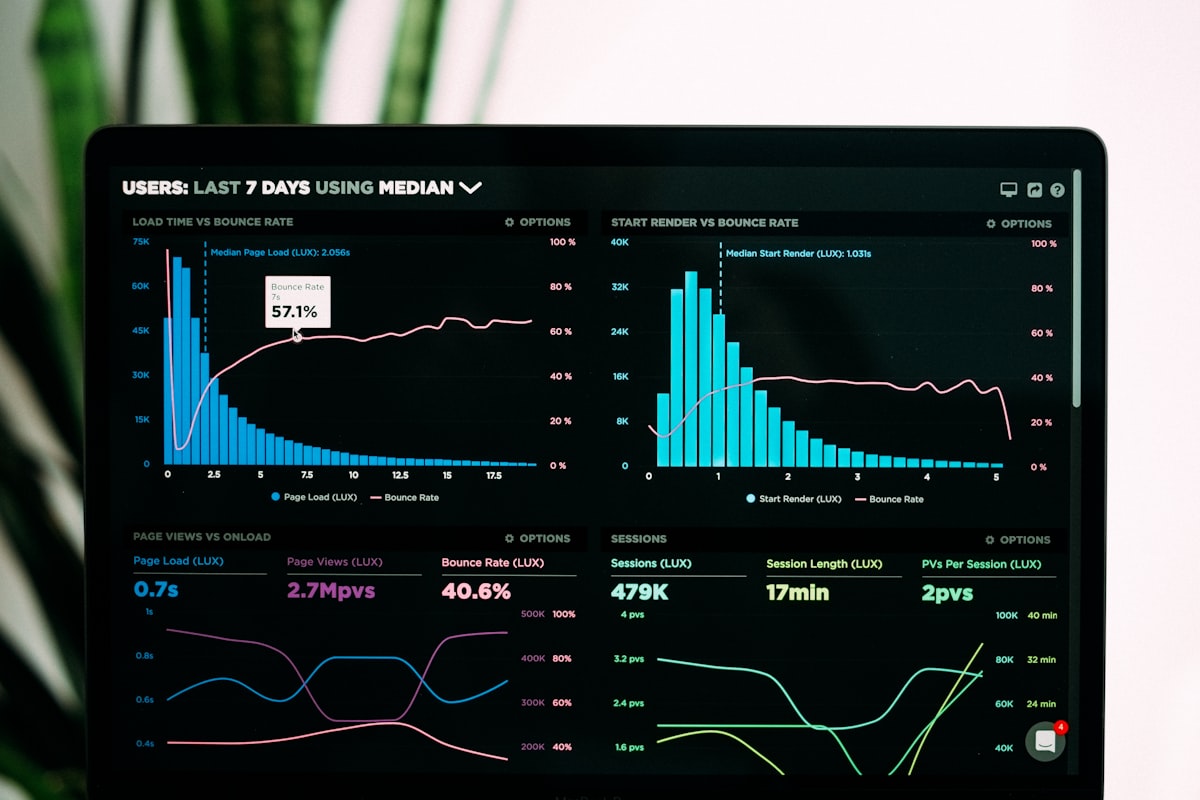
📸 Photo by Łukasz Łada on Unsplash
10.1 Purpose and Usefulness of the Statement of Cash Flows
The statement of cash flows provides information about cash receipts and cash payments during a period, classified into operating, investing, and financing activities. It helps users assess a company's ability to generate future cash flows, meet obligations, pay dividends, and finance growth. It also reveals the reasons for the difference between net income and net cash from operations.
10.2 Classification of Cash Flows – Detailed Definitions
Operating activities: Transactions that affect net income. Includes cash received from customers, cash paid to suppliers and employees, interest and dividends received (under U.S. GAAP, interest and dividends received are operating; interest paid is operating; dividends paid are financing), and taxes paid.
Investing activities: Lending money and collecting on those loans; acquiring and selling long‑term assets (PP&E, investments).
Financing activities: Obtaining resources from owners (issuing stock) and providing them a return (dividends); borrowing money (issuing bonds, notes) and repaying principal.
10.3 Preparing the Statement – Indirect Method (Step‑by‑Step)
The indirect method starts with net income and adjusts for non‑cash items and changes in working capital. We'll use a comprehensive example with corrected numbers. Assume the following for 2024:
Income Statement (selected): Net income $48,000. Depreciation expense $9,000. Loss on sale of equipment $2,500.
Balance Sheet changes: Accounts receivable increased $6,000; Inventory decreased $4,000; Prepaid expenses increased $1,500; Accounts payable increased $5,000; Accrued liabilities decreased $2,000.
Balance Sheet changes: Accounts receivable increased $6,000; Inventory decreased $4,000; Prepaid expenses increased $1,500; Accounts payable increased $5,000; Accrued liabilities decreased $2,000.
Operating activities: Net income $48,000. Add back non‑cash expenses: depreciation +$9,000. Add loss on sale (non‑operating) +$2,500. Adjust for changes in working capital: Increase in A/R (use of cash) –$6,000; Decrease in inventory (source) +$4,000; Increase in prepaid (use) –$1,500; Increase in A/P (source) +$5,000; Decrease in accrued liabilities (use) –$2,000. Net cash from operations = 48,000 + 9,000 + 2,500 – 6,000 + 4,000 – 1,500 + 5,000 – 2,000 = $59,000.
Investing activities: Purchased equipment for $25,000 (cash outflow). Sold equipment with original cost $15,000, accumulated depreciation $8,000 for $5,000 (cash inflow). The loss on sale was already added back. Net investing cash flow = ($25,000) + $5,000 = ($20,000).
Financing activities: Issued common stock for $12,000; paid dividends $10,000; repaid long‑term note $7,000. Net financing cash flow = $12,000 – $10,000 – $7,000 = ($5,000). Overall change in cash = $59,000 – $20,000 – $5,000 = $34,000. Add beginning cash $22,000 to get ending cash $56,000.
10.4 Direct Method (Optional but Illustrative)
Under the direct method, we report operating cash receipts and payments directly. For example, cash collected from customers = Sales – increase in A/R (or + decrease). If sales were $220,000 and A/R increased $6,000, cash collected = $214,000. Cash paid to suppliers = COGS + increase in inventory – increase in A/P (or adjustments). This method is encouraged but less common.
10.5 Free Cash Flow and Other Cash Flow Ratios
Free cash flow = Operating cash flow – capital expenditures – dividends. = $59,000 – $25,000 – $10,000 = $24,000. Measures cash available for expansion or debt reduction. Operating Cash Flow to Sales = $59,000 / $220,000 = 26.8%.
10.6 Comprehensive Financial Analysis Using Ratios
Integrate ratios from all chapters. Key categories: Liquidity: Current ratio, quick ratio. Solvency: Debt to equity, times interest earned. Profitability: Gross margin, profit margin, return on assets, return on equity. DuPont Framework: ROE = (Net income / Sales) × (Sales / Assets) × (Assets / Equity). Example: Net income $48,000; Sales $220,000; Assets $300,000; Equity $150,000. ROE = 48,000/150,000 = 32%. DuPont: (48/220)=21.82% × (220/300)=0.7333 × (300/150)=2 = 32%.
📚 References & Further Reading
- Weygandt, J. J., Kimmel, P. D., & Kieso, D. E. (2024). Financial Accounting (13th ed.). Wiley. Publisher link
- Libby, R., Libby, P., & Hodge, F. (2023). Financial Accounting (12th ed.). McGraw‑Hill. View at MHE
- Spiceland, J. D., Thomas, W., & Herrmann, D. (2022). Financial Accounting (7th ed.). McGraw‑Hill. Details
- FASB Accounting Standards Codification. asc.fasb.org
- SEC – “Beginner’s Guide to Financial Statements.” SEC.gov
- Investopedia – In‑depth articles on all topics. investopedia.com
All images from Unsplash under Unsplash License. Detailed attributions provided.
✅ End of Financial Accounting: Part Three
You have now completed a rigorous, corrected, and in‑depth exploration of inventory, long‑term assets, liabilities, equity, and cash flow analysis. You possess a strong, comprehensive foundation in financial accounting. Apply this knowledge with confidence.
E-cyclopedia Resources
by Kateule Sydney
is licensed under
CC BY-SA 4.0


Comments
Post a Comment