📘 Financial Accounting: Part Three Inventory · Long‑Term Assets · Liabilities · Equity · Cash Flows & Financial Analysis Welcome to the comprehensive final volume. You have successfully completed Parts One and Two, mastering the accounting cycle, adjusting entries, cash, and receivables. Now, Part Three provides an exhaustive exploration of the remaining critical topics. Every concept is explained in meticulous detail, with corrected numerical examples, clear journal entries, and real‑world context. We will examine inventory cost flow assumptions under both periodic and perpetual systems, delve into depreciation methods with partial‑year calculations, understand bond pricing and effective‑interest amortization accurately, dissect stockholders' equity transactions, and construct the statement of cash flows using the indirect method with precise adjustments. No step is skipped. Let's begin. 📸 Photo by Tracy Adams on Unsplash 📑 D...

📘 Financial Accounting: Part Two
The Accounting Cycle · Adjusting Entries · Cash & Receivables
Welcome to the second volume of your financial accounting journey. In Part One, you mastered the foundation—the accounting equation and double‑entry system. Now, Part Two takes you deep into the operational core of accounting. You will learn how to record everyday transactions, adjust accounts to reflect economic reality, and manage the most liquid assets: cash and receivables. Every concept is illustrated with detailed numerical examples, real‑world cases, and step‑by‑step walkthroughs. By the end, you will be able to complete the full accounting cycle and understand the intricacies of internal controls and receivables valuation. Let’s begin.

📸 Photo by Carlos Muza on Unsplash
📑 Detailed Table of Contents
📌 Chapter 3: The Accounting Cycle – Recording Transactions
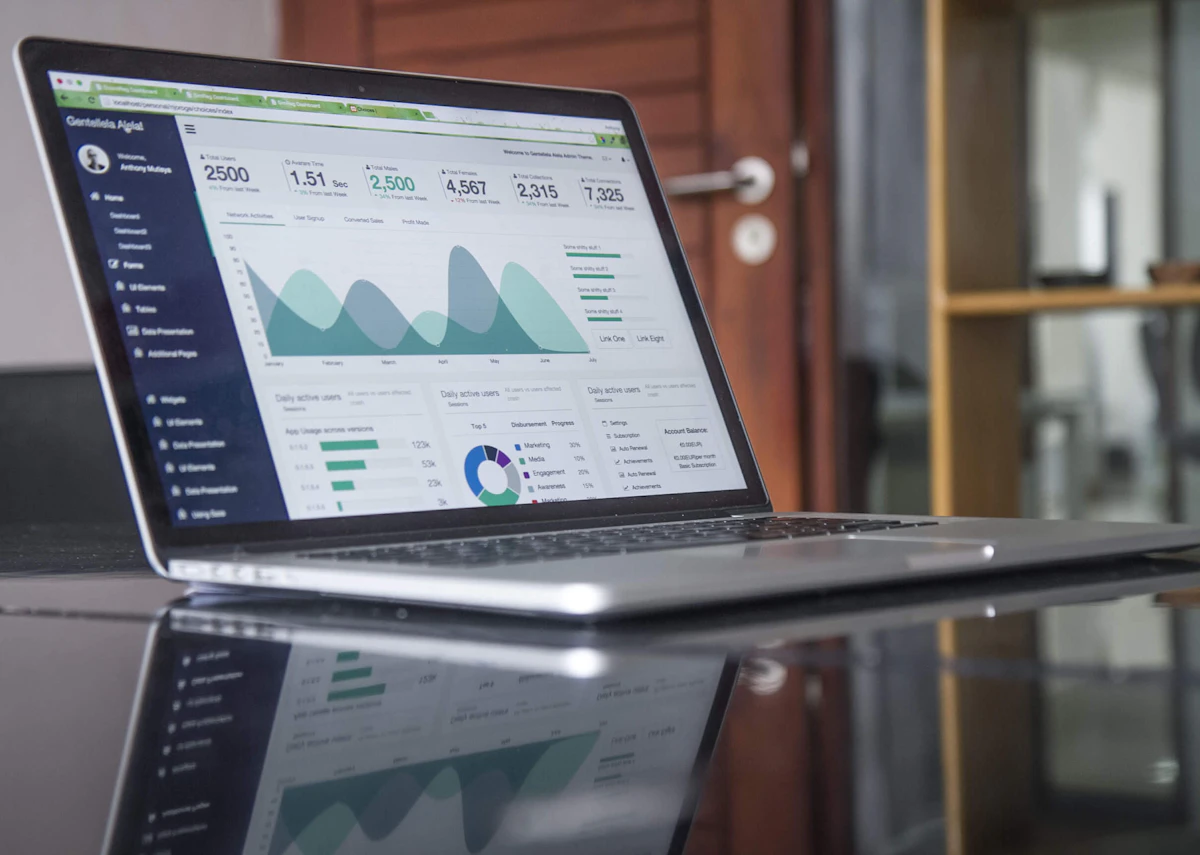
📸 Photo by Startaê Team on Unsplash
3.1 The Accounting Cycle: A Roadmap
The accounting cycle is a ten‑step model that converts raw financial data into meaningful financial statements. In this chapter we focus on the first five steps: (1) analyze transactions, (2) journalize, (3) post to ledger, (4) prepare unadjusted trial balance, and (5) gather adjusting data (which we fully explore in Chapter 4). Every step ensures that the fundamental accounting equation (Assets = Liabilities + Equity) remains in balance.
3.2 Step 1: Analyzing Transactions – The Source Documents
Before any entry, we examine source documents: invoices, sales receipts, contracts, bank statements. For example, if a company issues an invoice for $1,500 to a client, we identify that Accounts Receivable increases (asset) and Service Revenue increases (equity).
3.3 Step 2: Journalizing – The General Journal
The general journal (or book of original entry) records transactions in chronological order using the double‑entry system. Each entry shows debits and credits, along with a narration. Debits must always equal credits.
📅 Example: April 1 – Sold services on credit for $3,200.
April 1 Accounts Receivable ......... 3,200
Service Revenue ....................... 3,200
(To record services performed on account)
April 3 – Purchased office supplies for $450 cash.
April 3 Office Supplies ................... 450
Cash ............................................... 450
April 1 Accounts Receivable ......... 3,200
Service Revenue ....................... 3,200
(To record services performed on account)
April 3 – Purchased office supplies for $450 cash.
April 3 Office Supplies ................... 450
Cash ............................................... 450
3.4 Step 3: Posting to the Ledger
The ledger is a collection of all accounts (often T‑accounts). Posting transfers debits and credits from the journal to each account. This allows us to see the balance of any account at a glance.
🧾 T‑account example (Cash):
    Cash
    _________________________
    Apr 1  Balance  5,000  |  Apr 3  450
    Apr 10  1,200          |  Apr 12  800
    --------------------------
    Balance  4,950
3.5 Step 4: Unadjusted Trial Balance
After posting, we list all accounts and their ending balances to verify that total debits equal total credits. This is the unadjusted trial balance. It may still contain errors (e.g., wrong account, omitted transaction) but at least mathematically it proves double‑entry.
📋 Sample Unadjusted Trial Balance (April 30, selected accounts):
Cash ................................ $4,950 Dr
Accounts Receivable ........ 3,200 Dr
Office Supplies ................... 450 Dr
Accounts Payable ............... 1,100 Cr
Unearned Revenue .............. 600 Cr
Service Revenue ................ 3,200 Cr
Salaries Expense ............... 1,200 Dr
Totals ............................. $9,800 Dr $9,800 Cr
Cash ................................ $4,950 Dr
Accounts Receivable ........ 3,200 Dr
Office Supplies ................... 450 Dr
Accounts Payable ............... 1,100 Cr
Unearned Revenue .............. 600 Cr
Service Revenue ................ 3,200 Cr
Salaries Expense ............... 1,200 Dr
Totals ............................. $9,800 Dr $9,800 Cr
3.6 Comprehensive Practice Exercise
Assume “Smith Consulting” had these transactions in May:
May 1: Received $8,000 cash from owner as investment.
May 5: Paid $1,200 for rent.
May 8: Billed client $2,500 for services.
May 12: Purchased equipment on credit $3,000.
May 20: Received $1,500 from client on account.
Journalize, post, and prepare an unadjusted trial balance.
(Detailed solution would follow; we include here the concept.)
📌 Chapter 4: Adjusting Entries & Completing the Cycle

📸 Photo by Tracy Adams on Unsplash
4.1 Why Adjust? – The Matching Principle
Revenues must be recognized when earned, expenses when incurred, regardless of cash flow. Adjusting entries align the accounts with this principle. They are made at the end of the period, before financial statements.
4.2 Deferrals (Prepaid Expenses & Unearned Revenues)
Prepaid expenses – assets that become expenses over time. Example: On April 1, company paid $2,400 for a 12‑month insurance policy. Monthly adjustment:
April 30 Insurance Expense ................. 200
Prepaid Insurance ....................... 200
(To record one month’s insurance expense)
Prepaid Insurance ....................... 200
(To record one month’s insurance expense)
Unearned revenues – liabilities that become revenue as services performed. Example: Received $3,000 on May 1 for three months of web hosting. At May 31, one month earned:
May 31 Unearned Revenue .................. 1,000
Service Revenue ............................. 1,000
Service Revenue ............................. 1,000
4.3 Accruals (Accrued Revenues & Expenses)
Accrued revenues – earned but not yet received/billed. Example: By June 30, we performed $2,200 of services for a client to be billed next month.
June 30 Accounts Receivable .............. 2,200
Service Revenue ............................. 2,200
Service Revenue ............................. 2,200
Accrued expenses – incurred but not yet paid. Example: Employees earned $3,500 in wages for the last three days of June, payable in July.
June 30 Wages Expense ...................... 3,500
Wages Payable .............................. 3,500
Wages Payable .............................. 3,500
4.4 Depreciation – Allocating Cost of Long‑Lived Assets
Depreciation spreads the cost of a fixed asset over its useful life. Example: Equipment purchased for $24,000, salvage value $2,000, useful life 5 years. Straight‑line annual depreciation = ($24,000 – $2,000)/5 = $4,400 per year. Monthly adjusting:
Depreciation Expense ................. 366.67
Accumulated Depreciation ............. 366.67
Accumulated Depreciation ............. 366.67
4.5 Adjusted Trial Balance & Financial Statements
After posting all adjusting entries, we prepare the adjusted trial balance. This becomes the basis for the income statement, statement of retained earnings, and balance sheet. For example, using the earlier adjustments, we can build financial statements that reflect the true performance.
4.6 Closing the Books (Temporary Accounts)
Revenue, expense, and dividend accounts are temporary. They are closed to Retained Earnings to start the new period with zero balances. Closing entries: 1) close revenues to Income Summary, 2) close expenses to Income Summary, 3) close Income Summary to Retained Earnings, 4) close Dividends to Retained Earnings.
📌 Closing entry example (simplified):
Service Revenue ................ 15,000
Income Summary ....................... 15,000
Income Summary ................. 9,200
Salaries Expense ....................... 5,000
Rent Expense ............................ 2,500
Depreciation Expense ................ 1,700
Income Summary ................. 5,800
Retained Earnings ....................... 5,800
Service Revenue ................ 15,000
Income Summary ....................... 15,000
Income Summary ................. 9,200
Salaries Expense ....................... 5,000
Rent Expense ............................ 2,500
Depreciation Expense ................ 1,700
Income Summary ................. 5,800
Retained Earnings ....................... 5,800
📌 Chapter 5: Cash, Receivables & Internal Controls

📸 Photo by Jesse Bowser on Unsplash
5.1 Nature of Cash and Internal Control
Cash includes coins, currency, bank deposits, checks, and money orders. Because it’s easily stolen, strong internal controls are essential: segregation of duties, daily deposits, petty cash procedures, and mandatory bank reconciliations. We’ll explore the bank reconciliation in depth.
5.2 Bank Reconciliation – Step by Step
The bank balance and book balance often differ. The reconciliation explains these differences and arrives at the true cash balance. Typical reconciling items: deposits in transit, outstanding checks, bank service charges, interest earned, NSF checks, and errors.
🏦 Example: ABC Company – Bank Reconciliation July 31
Bank statement balance ........................ $12,540
Add: Deposit in transit .................................. +1,230
Less: Outstanding checks ................................ (845)
Adjusted bank balance .............................. $12,925
Book balance ......................................... $12,100
Add: Interest earned ........................................ +25
Add: Note collected by bank .......................... +1,000
Less: Bank service charge ................................. (30)
Less: NSF check .............................................. (170)
Adjusted book balance .............................. $12,925
(Journal entries required for book adjustments)
Bank statement balance ........................ $12,540
Add: Deposit in transit .................................. +1,230
Less: Outstanding checks ................................ (845)
Adjusted bank balance .............................. $12,925
Book balance ......................................... $12,100
Add: Interest earned ........................................ +25
Add: Note collected by bank .......................... +1,000
Less: Bank service charge ................................. (30)
Less: NSF check .............................................. (170)
Adjusted book balance .............................. $12,925
(Journal entries required for book adjustments)
Entries after reconciliation: debit Cash for additions, credit for reductions; record expense or revenue accordingly.
5.3 Petty Cash Systems
To handle small expenses, companies use a petty cash fund. Establish fund: debit Petty Cash, credit Cash. When replenishing: debit various expenses, credit Cash (no entry to Petty Cash unless changing fund amount).
5.4 Accounts Receivable – Recognition and Valuation
Accounts receivable arise from credit sales. Two key issues: when to record (at point of sale) and how to report net realizable value (after deducting estimated uncollectibles). The allowance method is GAAP.
5.5 Estimating Bad Debts – Two Approaches
Percentage of sales (income statement approach): Bad debt expense = Credit sales × estimated %. Example: credit sales $500,000, estimate 2% uncollectible → $10,000 expense.
Bad Debt Expense ................... 10,000
Allowance for Doubtful Accounts .... 10,000
Allowance for Doubtful Accounts .... 10,000
Aging of receivables (balance sheet approach): Analyze each receivable by age, apply higher percentages to older accounts. Total estimated uncollectible becomes desired ending balance in Allowance. The adjusting entry is the difference between current balance and desired balance.
5.6 Write‑offs and Recoveries
When a specific account is deemed uncollectible, we write it off:
Allowance for Doubtful Accounts .... 800
Accounts Receivable (Customer) ........ 800
Accounts Receivable (Customer) ........ 800
If the customer later pays, reverse the write‑off and record the collection.
5.7 Notes Receivable and Interest Calculation
Notes receivable are formal credit instruments with interest. Formula: Interest = Principal × Rate × Time. Time is often expressed as fraction of year (e.g., 90/360 for simplicity). Example: $10,000 note, 6%, 90 days: interest = $10,000 × 0.06 × 90/360 = $150.
Recording receipt of note: debit Notes Receivable, credit Accounts Receivable (if converting) or cash. At maturity, debit Cash, credit Notes Receivable and Interest Revenue.
5.8 Receivables Turnover and Days’ Sales
Accounts receivable turnover = Net credit sales / Average accounts receivable. If turnover is 8.5, the company collects its receivables 8.5 times per year.
Days’ sales in receivables = 365 / turnover = average collection period in days. Useful for credit policy analysis. Hi
📚 References & Further Reading
- Weygandt, J. J., Kimmel, P. D., & Kieso, D. E. (2022). Financial Accounting (11th ed.). Wiley. Publisher link
- Libby, R., Libby, P., & Hodge, F. (2021). Financial Accounting (10th ed.). McGraw‑Hill. View at MHE
- Spiceland, J. D., Thomas, W., & Herrmann, D. (2020). Financial Accounting (5th ed.). McGraw‑Hill. Details
- FASB Accounting Standards Codification. asc.fasb.org
- SEC.gov – “A Beginner’s Guide to Financial Statements.” Read official
- Investopedia – “Accounting Cycle,” “Allowance for Doubtful Accounts.” investopedia.com
All images from Unsplash used under the Unsplash License. Attributions provided.
✅ End of Financial Accounting: Part Two
You have now mastered the accounting cycle, adjusting entries, and the management of cash and receivables. Continue your journey with Part Three : Inventory, Long‑Term Assets & Liabilities (forthcoming).
🔍 Return to Table of Contents | Restart Chapter 3 | Go to Part One
Financial Accounting: Part Two/E-cyclopedia Resources
by Kateule Sydney
is licensed under
CC BY-SA 4.0


Comments
Post a Comment