
COMESA Launches Investigation into Meta's WhatsApp Business AI Restrictions Last Verified: 2026-07-31 | Author: Kateule Sydney | Published by E-cyclopedia Resources | Topic: COMESA Meta WhatsApp Business AI Investigation COMESA investigates Meta over WhatsApp Business AI access restrictions affecting African digital markets Summary: The COMESA Competition and Consumer Commission launched an investigation in February 2026 into Meta Platforms Ireland Limited over allegations that amendments to WhatsApp Business Solution Terms in October 2025 unlawfully excluded third-party AI providers from accessing the platform while preserving preferential treatment for Meta AI, potentially abusing a dominant position across 21 African member states. Table of Contents Chapter 1 — The WhatsApp Business API Restrictions and Complaint Chapter 2 — COMESA's New Digital Market Enforcement Powers Chapter 3 — Parallel Global Investigations and Enforce...
Chapter 5: Customer Journey Analytics and Data Insights
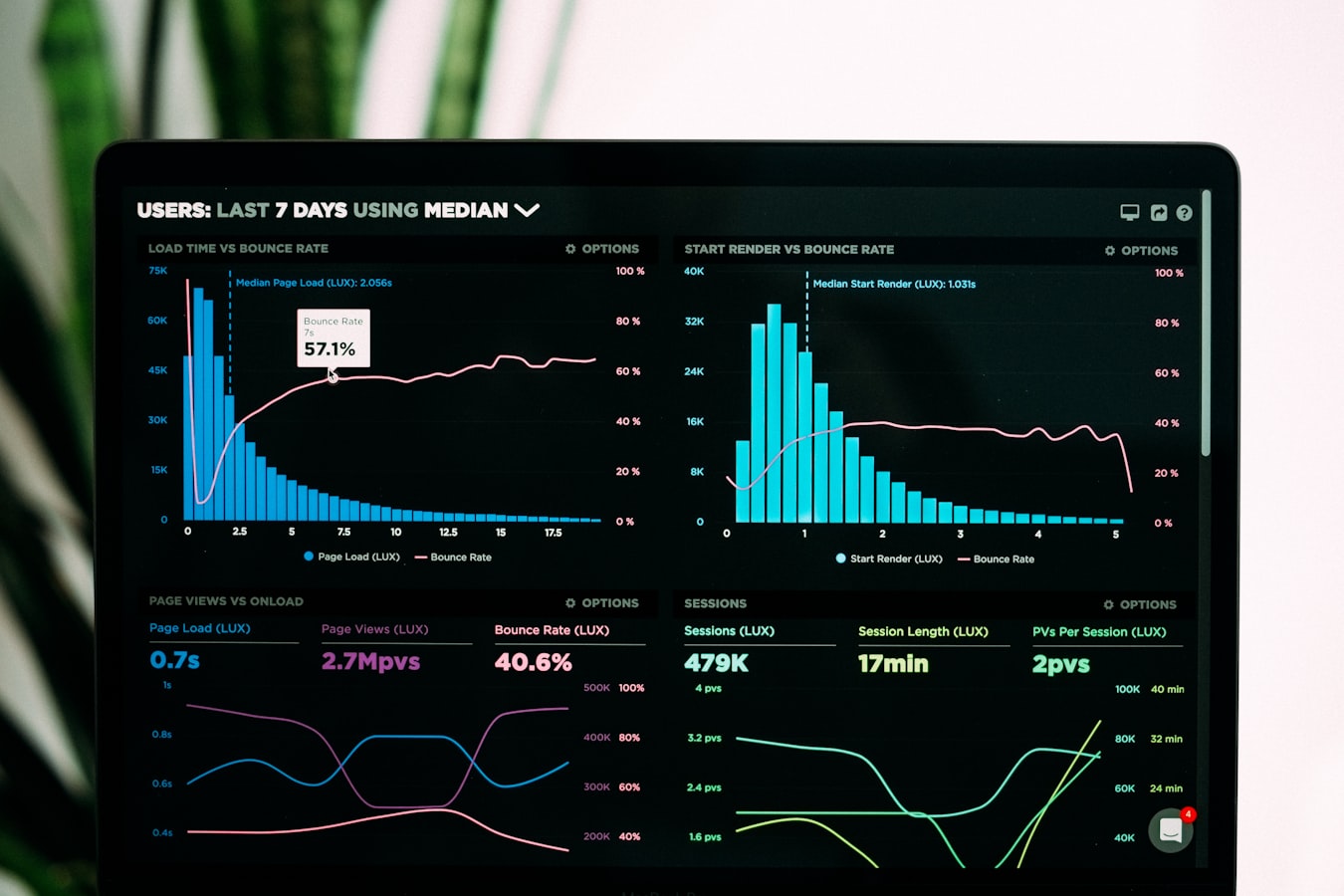
A beautifully mapped customer journey is only the beginning. To truly understand and optimize the customer experience, you must harness the power of data. Customer journey analytics transforms raw information into actionable insights, revealing not just what customers do, but why they do it. In this chapter, we explore how data can illuminate the path to customer-centricity, from behavioral analysis to predictive modeling.
📌 Learning Objectives
- By the end of this chapter, you will be able to explain the role of data in customer experience strategy.
- By the end of this chapter, you will be able to analyze customer behavior patterns using journey data.
- By the end of this chapter, you will be able to apply predictive analytics to anticipate customer needs.
- By the end of this chapter, you will be able to integrate data across business channels for a unified view.
- By the end of this chapter, you will be able to leverage analytics platforms like Salesforce for CX insights.
🔑 Key Terms
The process of tracking and analyzing customer interactions across all touchpoints to understand behavior and optimize experiences.
The use of historical data, statistical algorithms, and machine learning to forecast future customer behavior.
Combining data from multiple sources (web, mobile, in-store, CRM) to create a single, unified view of the customer.
Dividing customers into groups based on their actions, preferences, and engagement patterns.
A framework for assigning credit to different touchpoints along the customer journey that lead to a desired outcome (e.g., a purchase).
5.1 The Role of Data in Customer Experience
Data is the fuel that powers customer-centric organizations. Without it, decisions are based on intuition and guesswork. With it, you can:
- Measure what matters: Track KPIs like NPS, CSAT, and retention to gauge performance.
- Identify friction points: Pinpoint where customers drop off or express dissatisfaction.
- Personalize interactions: Tailor messages and offers based on individual behavior.
- Predict future behavior: Anticipate churn, upsell opportunities, and emerging needs.
- Justify investments: Build a business case for CX initiatives with hard data.
However, data alone is not enough. It must be translated into insights that drive action, and it must be used ethically, with respect for customer privacy.
5.2 Customer Behavior Analysis
Behavioral analysis seeks to understand not just what customers did, but the underlying motivations and patterns. Key approaches include:
Cohort Analysis
Grouping customers by shared characteristics (e.g., acquisition date) to track behavior over time.
Grouping customers by shared characteristics (e.g., acquisition date) to track behavior over time.
Funnel Analysis
Visualizing the steps customers take toward a goal and identifying where they drop off.
Visualizing the steps customers take toward a goal and identifying where they drop off.
Path Analysis
Mapping the sequences of touchpoints customers follow, revealing common and unexpected routes.
Mapping the sequences of touchpoints customers follow, revealing common and unexpected routes.
RFM Analysis
Scoring customers based on Recency, Frequency, and Monetary value to identify high-value segments.
Scoring customers based on Recency, Frequency, and Monetary value to identify high-value segments.
5.3 Predictive Analytics in CX Strategy
Predictive analytics moves beyond describing the past to forecasting the future. Common applications in CX include:
- Churn prediction: Identifying customers at risk of leaving so you can intervene with retention offers.
- Next best action: Recommending the most effective next step for each customer (e.g., a specific product, a service call).
- Lifetime value forecasting: Estimating future revenue from a customer to prioritize high-value segments.
- Sentiment analysis: Using natural language processing to gauge customer emotion from reviews, social media, and support tickets.
Predictive models are only as good as the data they're trained on, so clean, comprehensive data is essential.
Customer Analytics Maturity Model
📊 Level 1: Descriptive
What happened? Reports and dashboards showing historical data.
🔍 Level 2: Diagnostic
Why did it happen? Root cause analysis and segmentation.
🔮 Level 3: Predictive
What will happen? Forecasting and propensity models.
⚡ Level 4: Prescriptive
What should we do? Automated recommendations and next best actions.
5.4 Data Integration Across Business Channels
Customers interact with brands across a growing number of channels: websites, mobile apps, social media, email, in-store, call centers, and more. When data from these channels remains siloed, you get a fragmented view of the customer. Integration creates a single customer view that enables:
- Consistent experiences: A customer who abandons a cart on mobile can receive a relevant email reminder.
- Accurate attribution: Understanding which channels truly drive conversions.
- Holistic analytics: Analyzing journeys that span multiple channels, not just single touchpoints.
Customer Data Platforms (CDPs) and modern CRM systems are designed to unify data and make it accessible for analysis and activation.
5.5 Using Analytics Platforms for CX
Specialized platforms can accelerate your journey analytics capabilities. Here are three leading examples:
Salesforce Customer 360
Unifies sales, service, marketing, and commerce data to create a single customer ID, enabling personalized engagement across channels.
Unifies sales, service, marketing, and commerce data to create a single customer ID, enabling personalized engagement across channels.
Adobe Experience Platform
Collects and organizes data in real time, using AI to power predictive insights and journey orchestration.
Collects and organizes data in real time, using AI to power predictive insights and journey orchestration.
Google Analytics 4
Uses event-based tracking and machine learning to provide cross-platform journey insights, with privacy at its core.
Uses event-based tracking and machine learning to provide cross-platform journey insights, with privacy at its core.
🎵 Case Study: Spotify Personalizes at Scale with Data
Challenge: With hundreds of millions of users, Spotify needed to deliver personalized experiences that kept listeners engaged.
Solution: Spotify's data infrastructure collects billions of streaming events daily—what users listen to, skip, save, and share. Machine learning models analyze this data to generate personalized playlists (Discover Weekly, Release Radar), recommend new music, and even create year-end "Wrapped" summaries.
Result: Personalization drives deep engagement and loyalty. Discover Weekly alone has billions of streams, and Wrapped has become a viral cultural moment each year, showcasing the power of data-driven customer experience.
📱 Real-World Example: Telecom Uses Predictive Analytics to Reduce Churn
A major telecom provider faced high customer churn. They built a predictive model using historical data: call quality complaints, billing inquiries, usage patterns, and payment history. The model identified customers with a high probability of churning in the next 30 days. The company then targeted these customers with personalized retention offers (e.g., a discount, a free upgrade) and proactive outreach from customer service. Churn was reduced by 15% in the first year, demonstrating the ROI of predictive analytics.
Key Insight: Data is not the destination—insight is. The goal of analytics is not to collect more data, but to ask better questions and take smarter actions that improve the customer experience.
📝 Chapter Summary
- Data plays a foundational role in measuring, understanding, and optimizing customer experience.
- Behavioral analysis techniques like cohort, funnel, and path analysis reveal patterns and motivations.
- Predictive analytics enables proactive CX, from churn prevention to next best action recommendations.
- Data integration across channels creates a unified customer view, enabling consistent and personalized experiences.
- Analytics platforms like Salesforce, Adobe, and Google provide the tools to operationalize insights at scale.
- Spotify and the telecom example demonstrate how data-driven strategies drive engagement and reduce churn.
❓ Review Questions
Short Answer:
- Describe three ways data can improve customer experience strategy.
- What is the difference between descriptive, predictive, and prescriptive analytics?
- Why is data integration across channels critical for understanding the customer journey?
Discussion Questions:
- Think of a company you use that seems to "know" what you want. What data might they be using, and how does it affect your experience?
- What are the ethical considerations of using predictive analytics in customer experience? How can companies balance personalization with privacy?
← Back to Book Home | ← Previous Chapter | Next Chapter: Omnichannel Customer Engagement →
Copyright Notice
All original text, chapter content, explanations, examples, case studies, problem sets, learning objectives, summaries, and instructional design are the exclusive intellectual property of Kateule Sydney / E-cyclopedia Resources. This content may not be reproduced, distributed, or transmitted in any form or by any means without prior written permission from the copyright holder, except for personal educational use.
For permissions, inquiries, or licensing requests, please contact: kateulesydney@gmail.com
© 2026 Kateule Sydney / E-cyclopedia Resources. All rights reserved.
Comments
Post a Comment