📘 Business Model Innovation
How to Create, Test, and Scale Profitable Business Models
E‑cyclopedia Resources by Kateule Sydney
Licensed under CC BY-SA 4.0
📑 PART 1 CONTENTS
🔍 Chapter 1: Business Model Canvas Deep Dive
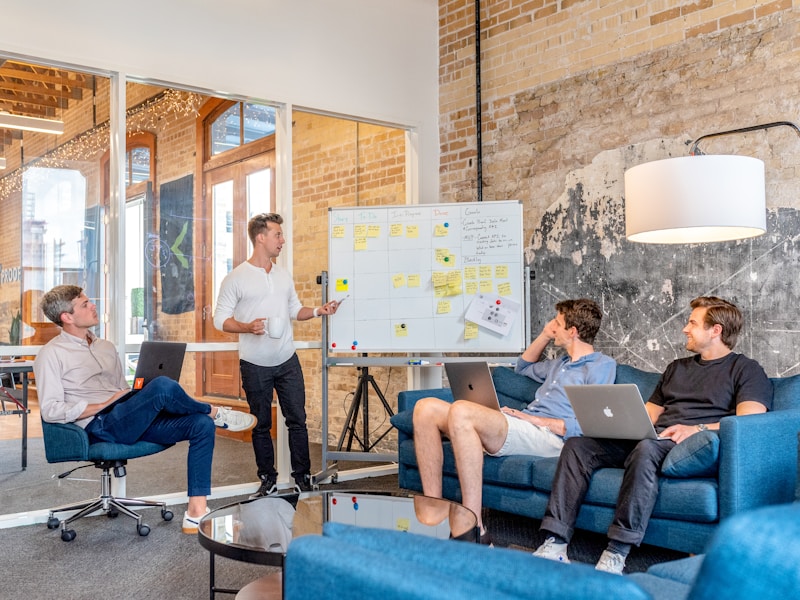
📌 1.1 Definition & Origins
The Business Model Canvas (BMC) is a strategic management framework developed by Alexander Osterwalder and Yves Pigneur in their 2010 book "Business Model Generation." It provides a visual chart with nine building blocks that describe a company's value proposition, infrastructure, customers, and finances. Unlike traditional business plans that can be dozens of pages long, the BMC fits on one page and emphasizes interconnections between elements.
The canvas was inspired by Alexander Osterwalder's PhD thesis under Professor Yves Pigneur at the University of Lausanne. It draws on concepts from balanced scorecard, lean startup, and design thinking. Today, it is used by millions of entrepreneurs and corporations including Intel, Deloitte, and P&G.
🏗️ 1.2 The Nine Building Blocks (Detailed)
1. Customer Segments: The different groups of people or organizations an enterprise aims to reach and serve. Organizations must make conscious decisions about which segments to serve and which to ignore. Types include: mass market (no distinction), niche market (specific specialization), segmented (slightly different needs), diversified (unrelated segments), and multi-sided platforms (interdependent segments). Example: Amazon serves both buyers (convenience) and sellers (marketplace access).
2. Value Propositions: The bundle of products and services that create value for a specific customer segment. Value can be quantitative (price, speed) or qualitative (design, customer experience). Elements include: newness (new needs), performance (better products), customization (tailored solutions), design (aesthetic appeal), brand/status (prestige), price (lower cost), cost reduction (help customers save), risk reduction (warranties), accessibility (reach more people), and convenience/usability (ease of use). Example: Tesla combines performance (acceleration), design (sleek cars), and brand (status).
3. Channels: How a company communicates with and reaches its customer segments to deliver value. Channels serve five phases: awareness (how do we raise awareness?), evaluation (how do we help customers evaluate?), purchase (how do we allow purchase?), delivery (how do we deliver value?), and after-sales (how do we provide support?). Channel types include sales force, web sales, own stores, partner stores, and wholesalers. Example: Warby Parker uses online sales + physical showrooms.
4. Customer Relationships: The types of relationships a company establishes with specific customer segments. Categories: personal assistance (human interaction), dedicated personal assistance (specific account managers), self-service (no direct relationship), automated services (computer algorithms), communities (user groups), and co-creation (customers co-design value). Example: Salesforce assigns dedicated account managers to enterprise clients while offering self-service for small businesses.
5. Revenue Streams: The cash a company generates from each customer segment. Each stream may have different pricing mechanisms. Types include: asset sale (selling ownership), usage fee (pay per use), subscription fees (recurring), lending/renting/leasing (temporary access), licensing (fees for using intellectual property), brokerage fees (intermediation services), and advertising (fees for promoting products). Example: Spotify uses subscription (premium) + advertising (free tier).
6. Key Resources: The most important assets required to make a business model work. Resources can be physical (factories, vehicles), intellectual (brands, patents, data), human (expertise, creativity), and financial (cash, lines of credit). Example: Airbnb's key resource is its host community, not physical buildings.
7. Key Activities: The most important things a company must do to make its business model work. Categories: production (designing, manufacturing), problem-solving (consulting, healthcare), and platform/network (matchmaking, software). Example: For Uber, key activities include platform maintenance, driver acquisition, and city expansion.
8. Key Partnerships: The network of suppliers and partners that make the business model work. Motivations: optimization and economy of scale (reduce costs), reduction of risk and uncertainty (competitors partner on R&D), and acquisition of particular resources and activities (outsourcing). Partnership types: strategic alliances (non-competitors), coopetition (competitors), joint ventures, and buyer-supplier relationships. Example: Apple partners with Foxconn for manufacturing.
9. Cost Structure: All costs incurred to operate a business model. Cost structures can be cost-driven (minimize costs wherever possible, e.g., Ryanair) or value-driven (focus on value creation, e.g., luxury hotels). Characteristics: fixed costs (salaries, rent), variable costs (scales with volume), economies of scale (cost advantage as output increases), and economies of scope (cost advantage through broader operations). Example: Netflix has high fixed costs for content but low variable costs per user.
💡 1.3 Real-World Example: Uber Detailed Canvas
Customer Segments: Riders (need transportation), Drivers (need flexible income). Value Proposition (Riders): Convenient app, cashless, reliable ETA, cheaper than taxis. Value Proposition (Drivers): Flexible hours, extra income, easy onboarding. Channels: Mobile app, website, word-of-mouth. Customer Relationships: Automated app, driver support, rating system. Revenue Streams: Per-ride commission (20-30%), surge pricing, Uber Eats delivery fees. Key Resources: App platform, driver network, brand, user data. Key Activities: Platform development, driver recruitment, city compliance, marketing. Key Partnerships: Payment processors (Stripe), mapping (Google), vehicle financing partners. Cost Structure: R&D, marketing, legal/regulatory, payment processing fees. Citation: Osterwalder, A. & Pigneur, Y. (2010). Business Model Generation. Wiley.
✍️ 1.4 Revision Questions
- List all nine building blocks of the Business Model Canvas and provide a one-sentence definition for each.
- Explain the difference between Customer Segments and Customer Relationships with examples.
- How do Key Resources differ from Key Activities? Use Amazon as an example.
- Choose a local business and sketch its BMC. Identify its primary revenue stream and key partners.
- Why is the Business Model Canvas considered a better tool for startups than traditional business plans?
📘 View Answers
1. Customer Segments (who), Value Propositions (what), Channels (how reached), Customer Relationships (type), Revenue Streams (money), Key Resources (assets), Key Activities (actions), Key Partnerships (who helps), Cost Structure (expenses).
2. Segments are WHO you serve; Relationships are HOW you interact. Example: Luxury hotel (segment: wealthy travelers) has personal concierge (relationship).
3. Resources are WHAT you have (Amazon: warehouses, technology); Activities are WHAT you DO (Amazon: order fulfillment, cloud management).
4. Example: Local bakery - Segments (nearby residents), Value (fresh bread), Revenue (direct sales), Partners (flour supplier).
5. BMC is visual, encourages iteration, shows interconnections, and fits one page.
📦 Chapter 2: Subscription Economy Strategies

📊 2.1 Definition & Evolution
The subscription economy refers to business models where customers pay recurring payments (monthly, annually) to access products or services. This model shifts focus from one-time transactions to long-term customer relationships. The term was popularized by Tien Tzuo, CEO of Zuora, in his book "Subscribed" (2018).
Historical evolution: Subscriptions began with newspapers and magazines (18th century), expanded to cable TV and gyms (20th century), and exploded with SaaS (Salesforce 1999) and streaming (Netflix 2007). Today, subscriptions exist for everything from razors (Dollar Shave Club) to cars (Porsche Passport). According to Zuora, subscription businesses grew revenues 5x faster than S&P 500 companies between 2012-2020.
🎯 2.2 Core Strategic Pillars
2.2.1 Customer Acquisition & Onboarding: Acquiring subscribers requires different tactics than one-time purchases. Free trials (7-30 days) allow users to experience value before paying. Freemium models (limited free version) attract mass users. Content marketing (blogs, webinars) builds trust. Referral programs incentivize word-of-mouth. Example: Dropbox grew 3900% in 15 months with referral program offering free storage.
2.2.2 Pricing & Packaging Strategies: Tiered pricing offers multiple plans to capture different segments. Feature-based tiers (Basic, Pro, Enterprise) allow upselling. Usage-based pricing charges based on consumption (Slack, AWS). Hybrid models combine subscription + usage fees. Psychological pricing ($9.99 vs $10) matters. Annual discounts improve cash flow and retention. Example: Netflix has Basic ($6.99), Standard ($15.49), Premium ($19.99) with different streams and resolution.
2.2.3 Retention & Churn Management: Churn (customer cancellation) is the biggest challenge. Monthly churn of 5% means losing 46% of customers annually. Strategies include: onboarding sequences (welcome emails, tutorials), engagement monitoring (track usage, identify at-risk users), win-back campaigns (discounts for returning), customer success teams (enterprise), and constant value addition (new features). Example: HubSpot uses in-app guides to increase feature adoption and reduce churn.
2.2.4 Expansion Revenue (Net Revenue Retention): Beyond retaining customers, successful subscription companies grow revenue from existing customers through upsells (higher tiers), cross-sells (related products), and add-ons (extra features). Net Revenue Retention (NRR) above 100% means existing customers are spending more over time. Example: Salesforce has NRR >110% through cross-selling Marketing Cloud and Tableau.
2.2.5 Bundling and Ecosystem Strategies: Bundling combines multiple services into one subscription, increasing value and stickiness. Pure bundling (all-or-nothing), mixed bundling (buy bundle or separately), and unbundling (separate services). Platform ecosystems integrate multiple services under one account. Example: Amazon Prime bundles shipping, video, music, reading, and gaming for $139/year.
🏢 2.3 In-Depth Case Study: Adobe Creative Cloud
Adobe transitioned from perpetual software licenses to cloud subscriptions in 2013 – a massive pivot for a 30-year-old company. Before: Creative Suite cost $700-$2500 upfront, with major upgrades every 18-24 months. Piracy was rampant. After: Creative Cloud from $9.99/month per app or $52.99/month for all apps.
Results: Revenue increased from $4 billion (2012) to over $17 billion (2023). Market cap grew from $20B to $250B. Customer base expanded from 3M to 30M+ subscribers. Piracy reduced dramatically. Continuous updates replaced major releases. Key success factors: Gradual transition (offering both options initially), clear value (cloud storage, updates, collaboration), and aggressive marketing. Citation: Adobe Annual Reports (2013-2023).
✍️ 2.4 Revision Questions
- Define the subscription economy and explain its evolution from traditional subscriptions to modern SaaS.
- What is churn and why is it critical to manage? Describe three strategies to reduce churn.
- Explain tiered pricing with examples from three different industries.
- How did Adobe's transition to subscriptions benefit the company beyond revenue? Discuss piracy, customer base, and innovation.
- What is Net Revenue Retention (NRR) and why is it more important than customer count?
📘 View Answers
1. Recurring payment model. Evolved from newspapers/magazines → cable/gyms → SaaS/streaming.
2. Churn = cancellation rate. Strategies: onboarding sequences, engagement monitoring, win-back offers.
3. Netflix (Basic/Standard/Premium), Spotify (Individual/Duo/Family), Salesforce (Essentials/Professional/Enterprise).
4. Reduced piracy, expanded customer base (lower entry cost), continuous updates, predictable revenue.
5. NRR measures revenue growth from existing customers; shows true health beyond acquiring new users.
🆓➡️💎 Chapter 3: Freemium to Premium Conversion

📱 3.1 Definition & Origins
Freemium (a portmanteau of "free" and "premium") is a pricing strategy where a product or service is provided free of charge, but money is charged for premium features, functionality, or virtual goods. The term was coined by Jarid Lukin of Alacra in 2006, though the model existed earlier (e.g., Adobe Acrobat Reader/Writer).
The model relies on the "1% rule" – typically 2-5% of free users convert to paid, but that small percentage subsidizes the rest. It works best when marginal cost of serving free users is near zero (digital goods). According to McKinsey, freemium SaaS companies grow 50% faster than those without free tiers.
⚙️ 3.2 Conversion Mechanics (Detailed)
3.2.1 Feature Limitation: Free version lacks advanced features. Users see premium features through UI but can't access them. Examples: Canva free (basic templates) vs Pro (brand kits, transparent backgrounds, 100M+ assets). LinkedIn free (limited searches) vs Premium (InMail, advanced filters).
3.2.2 Usage/Storage Limits: Free tier has caps on storage, seats, or usage. When users hit limits, they're prompted to upgrade. Examples: Dropbox free (2GB) vs Plus (2TB). Zoom free (40-min meetings) vs Pro (unlimited). Mailchimp free (500 contacts) vs Essentials (unlimited).
3.2.3 Time-Limited Trials: Full access for limited time, then reverts to free or requires payment. Often combined with credit card required to start trial. Examples: Netflix (30-day trial), Amazon Prime (30-day trial), Calm app (7-day trial).
3.2.4 Ad-Supported vs Ad-Free: Free version includes advertisements; premium removes ads and often adds features. Examples: Spotify, YouTube, Hulu.
3.2.5 Nudge Marketing & User Psychology: In-app messages highlighting premium benefits. "Only 2 free exports left – upgrade for unlimited!" Social proof ("Join 10,000+ premium users"). FOMO (fear of missing out) with limited-time offers. Comparison tables showing free vs premium features prominently.
3.2.6 Team/Social Features: Free for individual use, but team collaboration requires paid plan. Example: Slack free (limited message history, 10 app integrations) vs paid (unlimited, advanced admin).
📊 3.3 In-Depth Case Study: Spotify
Spotify launched in 2008 with a freemium model that became the template for music streaming.
Free tier limitations: Advertisements every few songs, shuffle-only on mobile, limited skips (6/hour), no offline listening. Premium benefits ($9.99): Ad-free, unlimited skips, offline downloads, high-quality audio, any song on-demand.
Conversion tactics: Persistent upgrade prompts, "listening party" ads from artists, occasional free trial offers, family and student discounts. Results (2024): 615M monthly active users, 246M premium subscribers (40% conversion rate among active users – much higher than typical due to strong value gap). Why it works: Free tier acts as marketing; users become dependent and eventually hit friction points. Citation: Spotify Investor Relations (2024).
You might want to read → BBA Entrance Exam Playbook: Complete Guide to IPMAT, SET, NPAT, DU JAT & CUET BBA
📉 3.4 Challenges & Optimization
Conversion rate optimization (CRO): Average freemium conversion is 2-5%. Improving by even 0.5% can double profits. Tactics: A/B testing upgrade prompts, simplifying payment flow, offering annual discounts, sending email sequences to engaged free users.
Risks: High server costs if free users are too expensive to serve. Cannibalization if free tier is "too good". Brand dilution if free users associate product with low quality. Mitigation: Ensure marginal cost of free users is low, constantly rebalance free vs paid features.
✍️ 3.5 Revision Questions
- Define freemium and explain the "1% rule" in this context.
- List and describe five different freemium conversion tactics with real-world examples.
- How does Spotify's free tier create enough friction to drive conversions without driving users away?
- What are the main risks of a freemium model and how can companies mitigate them?
- Calculate: If a service has 10 million free users and a 3% conversion rate at $10/month, what is monthly recurring revenue? If they improve conversion to 4%, what is the gain?
📘 View Answers
1. Free basic + paid premium. 1% rule: small % of free users subsidize the rest.
2. Feature limits (Canva), storage limits (Dropbox), time trials (Netflix), ads (Spotify), team features (Slack).
3. Ads interrupt experience, mobile limitations force desktop use, limited skips frustrate – all solved by premium.
4. High server costs (mitigate: efficient infrastructure), too generous free tier (mitigate: rebalance features).
5. 10M * 3% = 300,000 * $10 = $3M MRR. At 4% = 400,000 * $10 = $4M MRR. Gain = $1M monthly.
📚 References
- Osterwalder, A. & Pigneur, Y. (2010). Business Model Generation. Wiley. View Resource →
- Tzuo, T. (2018). Subscribed: Why the Subscription Model Will Shape the Future. Penguin. View Resource →
- Kumar, V. (2014). "Making Freemium Work." Harvard Business Review. Read Article →
- McCarthy, D. & Fader, P. (2020). "Customer Centricity in the Subscription Economy." Wharton School Press.
- Spotify (2024). Investor Relations Annual Report. View Report →
- Adobe (2023). Annual Reports and Financials. View Reports →
➡ PART 2:
Marketplace Platform Models · Blue Ocean Strategy · Pivoting Successfully
E‑cyclopedia Resources
Business Model Innovation Textbook by Kateule Sydney
Licensed under CC BY-SA 4.0 — Share with attribution
All images from Unsplash · For educational use only
E-cyclopedia Resources
by Kateule Sydney
is licensed under
CC BY-SA 4.0


