Chapter 5: The Horizon – Innovation in the Next Era
From The Innovation Engine: Powering Progress in a Changing World — A research‑backed guide to sparking, developing, and scaling breakthrough ideas.
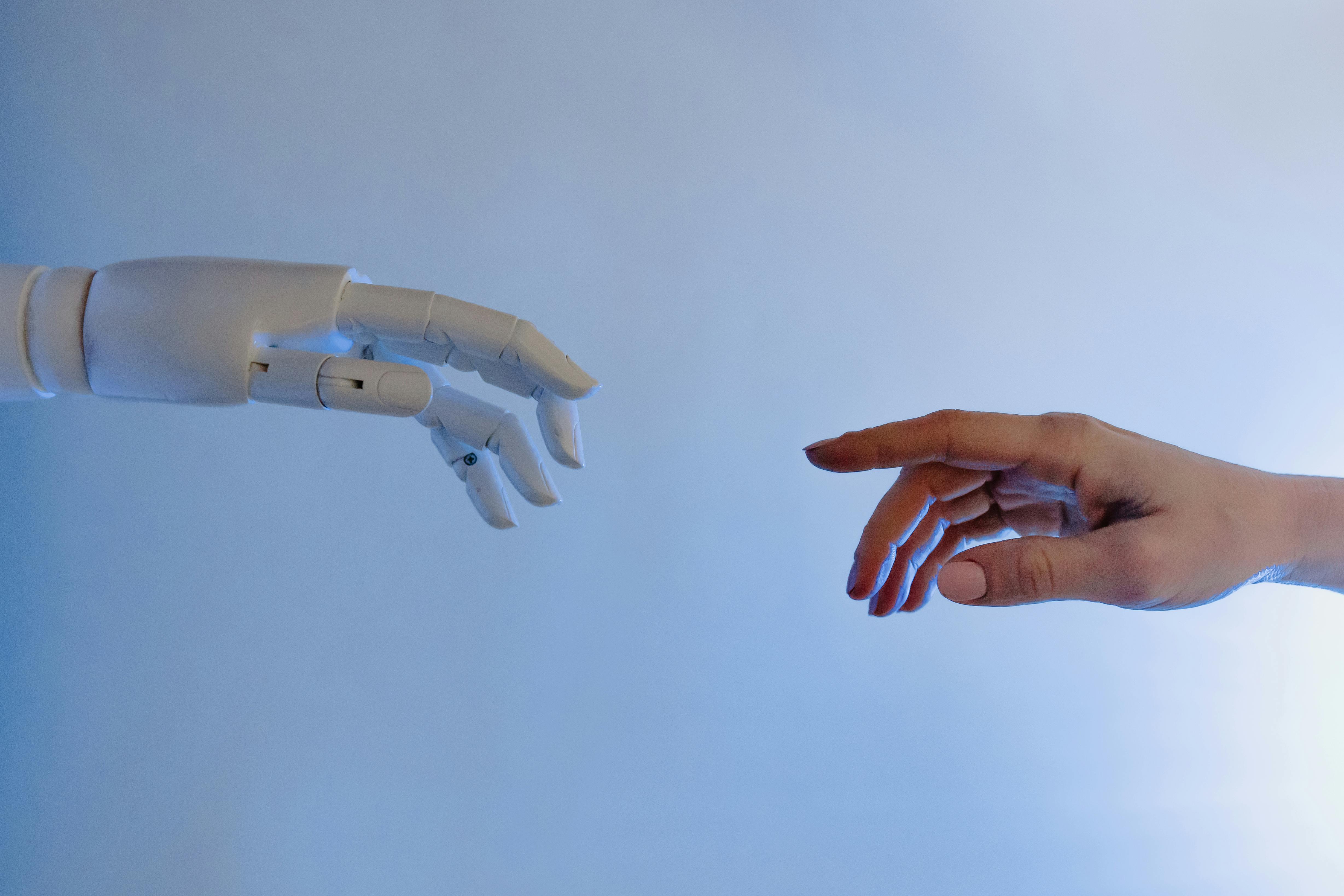
The Co‑Creation Engine: How AI Will Augment and Accelerate Human Ingenuity
Artificial intelligence is shifting from automation to augmentation—amplifying human creativity rather than replacing it. Generative AI tools (e.g., ChatGPT, Midjourney) enable rapid prototyping, hypothesis generation, and pattern recognition at scale. In drug discovery, AI reduced lead compound identification from years to months (Zhavoronkov, 2023). The future will see human‑AI teams where AI handles exploration and humans provide judgment, ethics, and purpose.
Definition – Co‑Creation: A collaborative process where humans and AI work together to generate novel ideas, designs, or solutions, leveraging each other’s strengths—AI’s speed and scale, and human’s contextual understanding and values.
Case Study – DeepMind’s AlphaFold: AlphaFold, an AI system, solved the 50‑year‑old protein folding problem, predicting the 3D structure of nearly all known proteins. This breakthrough accelerates drug discovery and materials science. DeepMind released the database freely, exemplifying how AI can serve as a foundational co‑creation tool for the global scientific community (Jumper et al., 2021).
Legal Context – AI and Intellectual Property: As AI becomes a co‑creator, IP law struggles to keep pace. The U.S. Copyright Office has held that works generated solely by AI without human authorship are not copyrightable (Copyright Office, 2023). In Thaler v. Vidal (2022), the Federal Circuit affirmed that an AI system cannot be listed as an inventor on a patent. Organizations must carefully document human contribution to maintain IP protection.
The Sustainable Imperative: Innovating for a Circular and Equitable Economy
Climate change, resource scarcity, and social inequality are driving innovation toward circular models—designing for reuse, repair, and recycling—and equitable systems that distribute benefits broadly. Companies like Patagonia and Interface have built profitable business models around sustainability. Regulatory pressures (e.g., EU’s Circular Economy Action Plan) and consumer demand are accelerating this shift (Ellen MacArthur Foundation, 2021).
Definition – Circular Economy: An economic system aimed at eliminating waste and the continual use of resources through regenerative design, reuse, remanufacturing, and recycling.
Case Study – Interface’s Mission Zero: Interface, a global carpet tile manufacturer, committed to eliminating its environmental footprint by 2020 through “Mission Zero.” It transformed its supply chain to use recycled materials, developed a carpet recycling process, and reduced greenhouse gas emissions by 96%. The initiative not only improved sustainability but also saved hundreds of millions of dollars and strengthened brand loyalty (Anderson & White, 2009).
Case Law – Greenwashing and Consumer Protection: Companies making sustainability claims face scrutiny under consumer protection laws. In FTC v. Volkswagen Group of America (2018), Volkswagen settled for $2.8 billion after misrepresenting emissions compliance. The FTC’s “Green Guides” warn against deceptive environmental marketing. Innovators must substantiate claims with credible evidence to avoid liability.
The Future of Work: Adapting Skills and Structures for Continuous Disruption
The half‑life of skills is shrinking—estimated at five years for technical skills. Organizations must adopt “learning organizations” where continuous upskilling is embedded. Structures are shifting from hierarchies to fluid networks of teams. The rise of remote and hybrid work demands new collaboration practices. Leaders must balance flexibility with cohesion (Bersin, 2023).
Definition – Learning Organization: An organization that facilitates the learning of its members and continuously transforms itself to remain competitive. Key disciplines include systems thinking, personal mastery, mental models, shared vision, and team learning (Senge, 1990).
Case Study – AT&T’s Future Ready Initiative: AT&T invested $1 billion in employee education, partnering with online platforms to offer micro‑credentials in AI, data science, and cybersecurity. The program emphasized continuous learning rather than one‑time training. It helped close skills gaps and improved retention, demonstrating how large organizations can adapt to technological disruption (Davenport & Dyché, 2019).
Legal Note – Worker Classification in the Gig Economy: As work structures become more fluid, classification disputes rise. In Dynamex Operations West, Inc. v. Superior Court (2018), the California Supreme Court adopted the “ABC test” for independent contractor status. Proposition 22 later created a carve‑out for app‑based drivers, but the broader trend is toward stricter scrutiny. Organizations must ensure that flexible work arrangements comply with wage and hour laws.
Staying Agile: How to Build an Organization That Is Always Ready for What's Next
Organizational agility requires: (1) a clear but flexible strategy, (2) decentralized decision‑making, (3) rapid experimentation, and (4) a culture that embraces change. Companies like Amazon and Netflix embed agility through “two‑pizza teams,” a bias for action, and constant reinvention. The lesson: agility is not a project but a way of operating (Denning, 2018).
Definition – Organizational Agility: The ability to sense and respond rapidly to environmental changes while maintaining strategic coherence and operational efficiency.
Case Study – Netflix’s Culture of Freedom and Responsibility: Netflix codified its culture in a famous slide deck, emphasizing context over control, high talent density, and radical candor. This enabled rapid pivots—from DVD rentals to streaming, from licensing to original content. The culture allowed Netflix to disrupt itself before competitors could (Hastings & Meyer, 2020).
Case Law – Corporate Governance and Rapid Pivots: Agile decision‑making must still comply with corporate governance duties. In In re Walt Disney Co. Derivative Litigation (2006), the Delaware Chancery Court held that directors are protected by the business judgment rule even for failed strategies, provided they were adequately informed and acted in good faith. This gives boards latitude to experiment, but they must maintain oversight and document their processes.
References
- Anderson, R., & White, R. (2009). Confessions of a Radical Industrialist. St. Martin’s Press.
- Bersin, J. (2023). “The Future of Work: 2023 Predictions.” Bersin Insights, January 2023.
- Davenport, T., & Dyché, J. (2019). “The AT&T Skills Gap Experiment.” MIT Sloan Management Review, 60(3), 1–6.
- Denning, S. (2018). The Age of Agile: How Smart Companies Are Transforming the Way Work Gets Done. AMACOM.
- Ellen MacArthur Foundation. (2021). “The Circular Economy in Detail.” ellenmacarthurfoundation.org.
- Hastings, R., & Meyer, E. (2020). No Rules Rules: Netflix and the Culture of Reinvention. Penguin Press.
- Jumper, J., et al. (2021). “Highly Accurate Protein Structure Prediction with AlphaFold.” Nature, 596, 583–589.
- Senge, P. (1990). The Fifth Discipline: The Art and Practice of the Learning Organization. Doubleday.
- U.S. Copyright Office. (2023). “Copyright Registration Guidance: Works Containing Material Generated by Artificial Intelligence.” Federal Register, 88(49), 16190–16194.
- U.S. Court of Appeals for the Federal Circuit. (2022). Thaler v. Vidal, 43 F.4th 1207.
- U.S. District Court for the Northern District of California. (2018). FTC v. Volkswagen Group of America, No. 3:18-cv-00723.
- U.S. Supreme Court. (2018). Dynamex Operations West, Inc. v. Superior Court, 4 Cal.5th 903.
- U.S. Court of Chancery. (2006). In re Walt Disney Co. Derivative Litigation, 907 A.2d 693 (Del. Ch.).
- Zhavoronkov, A. (2023). “AI in Drug Discovery: A 2023 Perspective.” Nature Reviews Drug Discovery, 22(2), 87–88.
Continue Your Journey
About the Author
Kateule Sydney is a researcher, instructional designer, and founder of E-cyclopedia Resources. Kateule creates accessible, evidence‑based resources that help individuals and organizations thrive in a rapidly changing world.
Copyright & Disclaimer
© 2026 Kateule Sydney / E-cyclopedia Resources. All rights reserved. All original text, explanations, examples, case studies, and instructional design in this specific adaptation are the exclusive intellectual property of Kateule Sydney / E-cyclopedia Resources. This content may not be reproduced, distributed, or transmitted in any form or by any means without prior written permission from the copyright holder, except for personal educational use.
For permissions, inquiries, or licensing requests, please contact: kateulesydney@gmail.com
Disclaimer: This educational resource is for informational purposes only. While every effort has been made to ensure accuracy, innovation practices and legal frameworks evolve rapidly. Readers should consult current sources and qualified professionals for specific situations. The author and publisher assume no responsibility for errors, omissions, or any consequences arising from the use of this information.