Chapter 9: Macroeconomic Fundamentals
Measuring the economy’s performance: GDP, national income, and the determinants of long‑run economic growth.
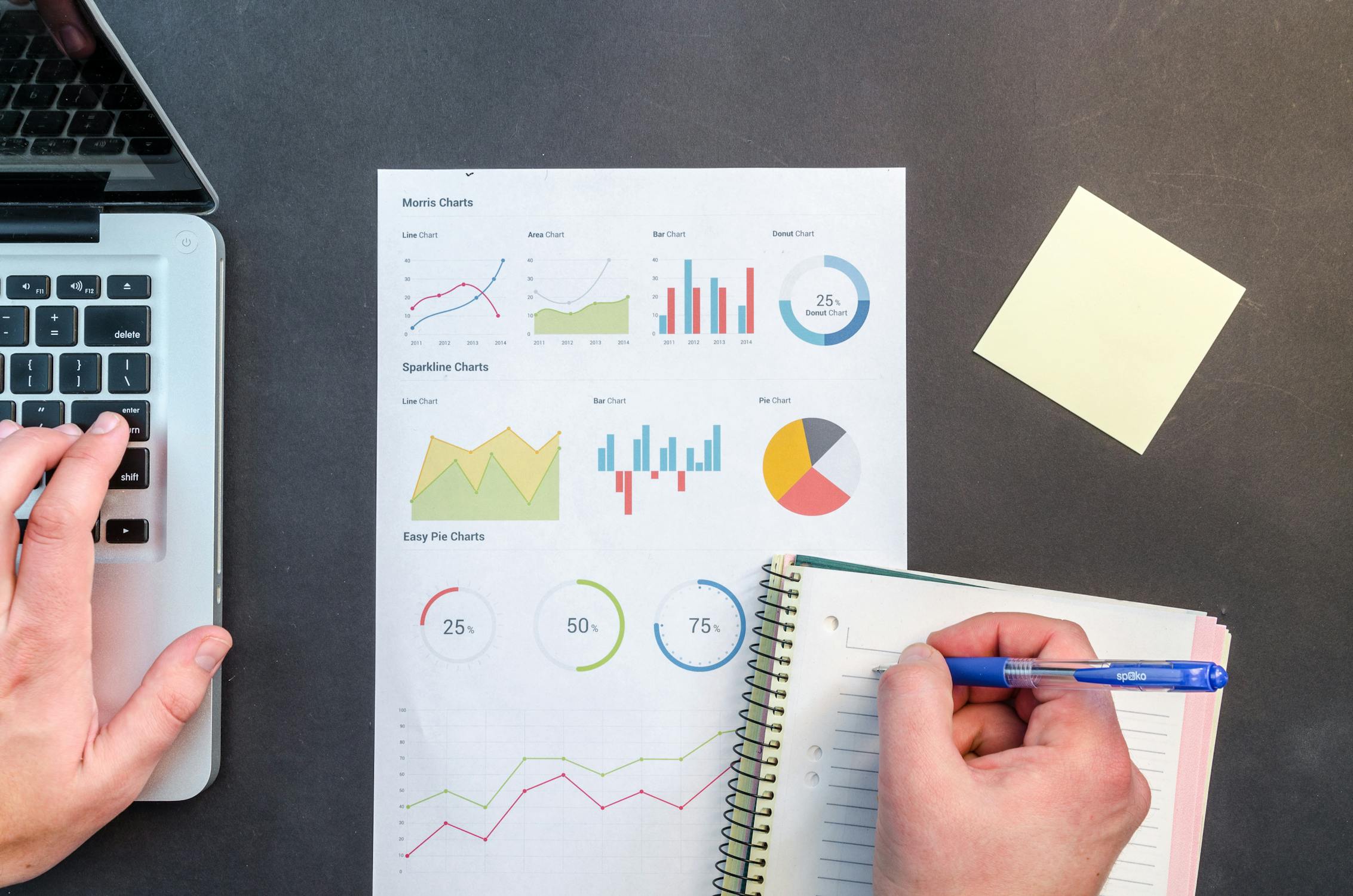
Macroeconomics examines the economy as a whole—the combined outcomes of millions of individual decisions. It focuses on aggregate measures such as total output, employment, price levels, and economic growth. This chapter introduces the key concepts and tools used to measure macroeconomic performance: Gross Domestic Product (GDP), national income accounting, and the determinants of long‑run growth. We also explore how governments and central banks use these metrics to guide policy and how legal frameworks support economic measurement.
9.1 Gross Domestic Product (GDP)
Gross Domestic Product (GDP) is the market value of all final goods and services produced within a country in a given period. It is the broadest measure of economic activity. GDP can be measured in three ways, which should yield the same total:
- Expenditure approach: Sum of consumption (C), investment (I), government spending (G), and net exports (X – M). GDP = C + I + G + (X – M).
- Income approach: Sum of all incomes earned in production (wages, rent, interest, profit).
- Output approach: Value added at each stage of production.
Nominal GDP is measured in current prices; real GDP adjusts for inflation using a base year, allowing comparison of output over time. The GDP deflator measures the overall price level.
9.2 National Income Accounting
National income accounts provide a detailed picture of economic activity. Key measures include:
- Gross National Product (GNP): Output produced by a country’s citizens, regardless of location.
- Net National Product (NNP): GNP minus depreciation.
- National Income: NNP minus indirect business taxes (or sum of factor incomes).
- Personal Income: Income received by households.
- Disposable Personal Income: Personal income minus taxes, available for spending or saving.
These measures help economists and policymakers understand the flow of resources through the economy and the distribution of income.
9.3 Economic Growth
Economic growth is the increase in real GDP per capita over time. Sustained growth is the primary source of rising living standards. Growth is driven by:
- Capital accumulation: Investment in physical capital (machinery, infrastructure).
- Technological progress: Innovations that increase productivity.
- Human capital: Education, skills, and health of the workforce.
- Institutions: Property rights, rule of law, and political stability.
The Solow growth model shows that in the long run, an economy’s output per worker depends on technology and the rate of investment. Without technological progress, growth eventually slows as diminishing returns set in. Endogenous growth theories emphasize that knowledge and innovation can generate sustained growth.
Case Study: The “Asian Tigers” (South Korea, Singapore, Taiwan, Hong Kong)
From the 1960s to 1990s, these economies experienced rapid growth through export‑oriented industrialization, high savings and investment rates, and investment in education. Their success illustrates how policies that promote capital accumulation and technology adoption can dramatically raise living standards.
9.4 Business Cycles and Real GDP Fluctuations
Economies do not grow smoothly; they experience business cycles—alternating periods of expansion and contraction. The phases are:
- Peak: Maximum output; employment may be above full employment.
- Recession: Significant decline in economic activity (two consecutive quarters of negative real GDP growth is a common definition).
- Trough: Lowest point; output and employment bottom out.
- Expansion: Recovery and growth toward the next peak.
Recessions cause hardship and are a primary concern of macroeconomic policy. The Great Recession (2007‑2009) and the COVID‑19 recession (2020) are recent examples of severe downturns that prompted unprecedented policy responses.
9.5 Productivity and Standards of Living
Long‑run living standards depend on labor productivity—output per worker or per hour. Productivity growth allows higher wages without inflation. Factors that boost productivity include:
- Investment in new technology
- Improvements in worker skills
- Efficient allocation of resources
- Public infrastructure
9.6 Legal Foundations for Economic Measurement
Accurate economic measurement relies on legal definitions, data collection mandates, and confidentiality protections. For example, the U.S. Bureau of Economic Analysis (BEA) and Bureau of Labor Statistics (BLS) rely on laws such as the Paperwork Reduction Act and Confidential Information Protection and Statistical Efficiency Act to collect and protect data.
Case Law: Department of Commerce v. New York (2019)
The Supreme Court addressed the legality of adding a citizenship question to the census. While the case focused on the census, it highlighted the importance of accurate demographic data for economic analysis and policy. The Court blocked the question, emphasizing that data collection must follow established procedures and not undermine the accuracy of counts used for apportionment and economic indicators.
9.7 Limitations of GDP
GDP is a powerful indicator, but it has limitations. It does not capture:
- Non‑market activities: Household production, volunteer work.
- Distribution: GDP per capita may rise while inequality widens.
- Environmental degradation: GDP counts production that harms the environment without subtracting the costs.
- Well‑being: Leisure, health, and social connections are not reflected.
Alternative measures, such as the Human Development Index (HDI) and Genuine Progress Indicator (GPI), attempt to supplement GDP with broader quality‑of‑life metrics.
Case Study: Bhutan’s Gross National Happiness Index
Bhutan has prioritized “Gross National Happiness” over GDP, using a composite index that includes psychological well‑being, health, education, and environmental diversity. While difficult to replicate, the approach highlights that economic growth is a means, not an end, and that policymakers must consider multiple dimensions of progress.
9.8 Conclusion
Macroeconomic fundamentals—GDP, national income accounts, and growth determinants—provide the framework for understanding and managing the economy. Accurate measurement is essential for policy formulation, but it must be complemented by awareness of the limitations of standard metrics. The next chapter explores macroeconomic stability, focusing on inflation, unemployment, and the aggregate demand‑aggregate supply model.
References
- Mankiw, N. G. (2021). Principles of Economics (9th ed.). Cengage Learning.
- Bureau of Economic Analysis. (2024). National Income and Product Accounts.
- World Bank. (2023). World Development Indicators.
- Department of Commerce v. New York, 588 U.S. ___ (2019).
- Acemoglu, D., & Robinson, J. A. (2012). Why Nations Fail. Crown Business.
- Ura, K., Alkire, S., & Zangmo, T. (2012). A Short Guide to Gross National Happiness Index. Centre for Bhutan Studies.
© 2026 Kateule Sydney / E-cyclopedia Resources. All rights reserved. All original text, explanations, examples, case studies, problem sets, learning objectives, summaries, and instructional design in this specific adaptation are the exclusive intellectual property of Kateule Sydney / E-cyclopedia Resources. This content may not be reproduced, distributed, or transmitted in any form or by any means without prior written permission from the copyright holder, except for personal educational use.
Disclaimer: This textbook is for educational purposes only. While every effort has been made to ensure accuracy, economic theories and data may evolve over time. Readers should consult current economic research and qualified advisors for specific applications. The author and publisher assume no responsibility for errors or omissions or for any consequences arising from the use of this information.
For permissions, inquiries, or licensing requests, please contact: kateulesydney@gmail.com