Deep Work (Cal Newport) — Strategic timeboxing for knowledge workers
Summary: Deep Work is Cal Newport's method for producing high-value output by working in a state of distraction-free concentration. Strategic timeboxing is the core scheduling discipline Newport prescribes to protect deep work from shallow tasks.
Table of Contents
1. Core Definitions: Deep vs Shallow Work
1.1 Deep Work Defined
Deep Work is professional activity performed in a state of distraction-free concentration that pushes your cognitive capabilities to their limit. These efforts create new value, improve your skill, and are hard to replicate.
Shallow Work is non-cognitively demanding, logistical-style tasks, often performed while distracted. These efforts tend to not create much new value in the world and are easy to replicate.
Newport's test to distinguish them: Ask, “How long would it take in months to train a smart recent college graduate with no specialized training in my field to complete this task?” If the answer is weeks, the task is likely shallow.
2. Strategic Timeboxing: Rules and Mechanics
2.1 Time Blocking as Core Method
Time blocking or timeboxing is the productivity method Newport advocates. You partition working hours into blocks assigned to specific activities instead of working from a task list. The core idea is that a task list is not enough to make the most of limited time.
Newport estimates a 40 hour time-blocked work week produces the same amount of output as a 60+ hour work week pursued without structure.
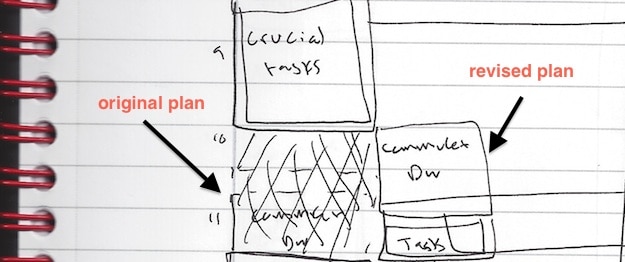
Key mechanics: At the start of each workday, create a plan for every minute, assigning activities to blocks of time. This reveals how days are actually spent and forces conscious decisions about attention.
2.2 Four Rules for Deep Work
Newport's training method consists of four rules:
1. Work deeply: Develop ability to work for an uninterrupted length of time on cognitively demanding tasks without distraction.
2. Embrace the boredom: Constant exposure to distracting stimuli conditions the brain to be unfocused. Training to resist temptation improves ability to focus deeply.
3. Quit social media: Social media is a huge distraction. Newport suggests quitting entirely or taking a 30-day break.
4. Drain the shallows: Tame shallow activities like emails and notifications to specific times so they do not interfere with deep work sessions.
2.3 Minimum Block Size and Batching
Blocks should generally be no shorter than 30 minutes. Smaller blocks make context switching too frequent.
Account for all time, including non-work activities like commuting or lunch. Every minute must be accounted for.
For administrative tasks, create shorter, themed blocks. For example, one block for “Family Emails,” and a separate block for “Project A Admin.” Never mix cognitive contexts in a single block.
Schedule a 15 to 30 minute “post-interaction block” after significant meetings to process notes, turn them into to-do items, and send follow-ups. This reduces the distraction impact of the meeting on subsequent deep work.
3. Four Philosophies for Scheduling Deep Work
3.1 Choosing a Philosophy That Fits Your Role
Newport outlines four philosophies for integrating deep work:
Monastic: Ruthlessly eliminate or minimize all shallow work. Best for academics, novelists, or anyone with extreme professional autonomy.
Bimodal: Divide time between long, dedicated deep work stretches and fully open shallow work periods. Example: A CEO offline two full days a week for strategy, available the other three.
Rhythmic: Make deep work a simple, consistent, repeating habit. Example: A programmer who blocks 8:00 AM to 9:30 AM every morning for coding, no exceptions.
Journalistic: Fit deep work into unexpected pockets of free time. Best for journalists or anyone with a reactive schedule.
4. Case Study: Weekly Planning and Time Block Execution
4.1 Lawyer Case Study: 45-Hour Deep Work Week
Company: Anonymous law practice
Year: 2014
Decision: Adopt weekly time-block planning using Newport's method instead of Outlook task scheduling.
Data Used: Weekly plan with specific 120-minute deep work blocks for contract drafting, distribution agreements, and strategic projects. Blocks included ship times like “Ship by 11am” and “Ship both by 4pm.”
Outcome: The lawyer reported accomplishing more in 45 hours than most could accomplish in 100. When he reviewed his week, he was surprised at how much more he accomplished compared to his usual method.
4.2 Newport’s Own Tracking: Good Week vs Bad Week
Company: Georgetown University
Year: Circa 2013-2014
Decision: Track time blocks in Black n’ Red notebooks to diagnose why some weeks had more deep work.
Data Used: Comparison of two weeks. Good week: close to half of time dedicated to academic deep work and writing. Bad week: less than a quarter of time on those efforts.
Outcome: Time blocking revealed scheduling traps that reduced depth. The data showed that even Newport struggled to fit enough deep work without intentional planning.
5. Implementation Kit for Knowledge Workers
5.1 Daily Time-Block Procedure
1. Identify Deep Work tasks: What demands focused attention? Examples: writing a complex report, designing an algorithm, developing a strategy.
2. Schedule dedicated blocks: Treat deep work like an appointment. Block specific time slots, ideally early in the morning or when most alert.
3. Create environment: Minimize distractions. Turn off notifications, silence phone, find quiet workspace.
4. Implement ritual: Establish consistent prework routine to signal focus. Could be meditation, walk, or calming music.
5. Limit context switching: Complete tasks in one sitting if possible. Minimize cognitive cost of jumping between activities.
6. Shutdown ritual: At day end, review all inboxes and task lists. Process loose items into systems or schedule for next day. Use demonstrative act like checking “shutdown complete” to signal work is finished.
5.2 Free Download: Daily Time-Block Template
Use this plain-text template to implement Newport's method. Compatible with paper notebooks or digital notes.
TIME BLOCKS:
06:00 |
06:30 |
07:00 | Deep Work: - 90min
08:30 | Admin: Email Batch
09:00 | Meeting:
10:00 | Post-Interaction Block: Process notes
10:30 | Deep Work: - 120min
12:30 | Lunch + Walk
13:30 | Shallow Work: Calls
15:00 | Deep Work: - 90min
16:30 | Plan Tomorrow
17:00 | SHUTDOWN COMPLETE [ ]
METRICS:
Deep Work Hours: __ / __
Distractions: __
NOTES:
FAQ
What if my schedule is unpredictable?
Use the Journalistic philosophy. Fit deep work into unexpected pockets of free time. Newport notes that busy people can still practice deep work by escaping for short blocks, such as 30 minutes, or using 90-minute sessions when available.
How much deep work is realistic per day?
Newport cites a model where the brain reaches its limit of concentration after two or three 90-minute sessions per day. Even one dedicated block of 90 minutes is a start. The key is consistency, not total hours.
Can time blocking work with meetings?
Yes. Schedule meetings as blocks. Add a 15-30 minute “post-interaction block” after significant meetings to process notes and send follow-ups. This prevents meeting residue from hurting subsequent deep work.
References
Deep Work: The Complete Guide (Inc. a Step-by-Step Checklist) - Todoist
3.2 Techniques for deep work from Cal Newport - I'd Rather Be Writing
Deep Habits: The Importance of Planning Every Minute of Your Work Day - Cal Newport
Deep Work: Ultimate Guide to Time Focus in 2026 - Reclaim.ai
Time block strategy to double your efficiency (and End Overload) - Simply Psychology
Unlocking Deep Work Cal Newport for Focused Success - Medium
Deep Habits: How a Big City Lawyer Uses Weekly Planning - Cal Newport
The Difficulties of Depth: A Case Study - Cal Newport
Deep Work By Cal Newport - Step-by-Step Guide - Pulsar UBA
The Time-Block Planner by Cal Newport - Penguin Random House