Chapter 3: Mechanisms of Transmission to Financial Markets
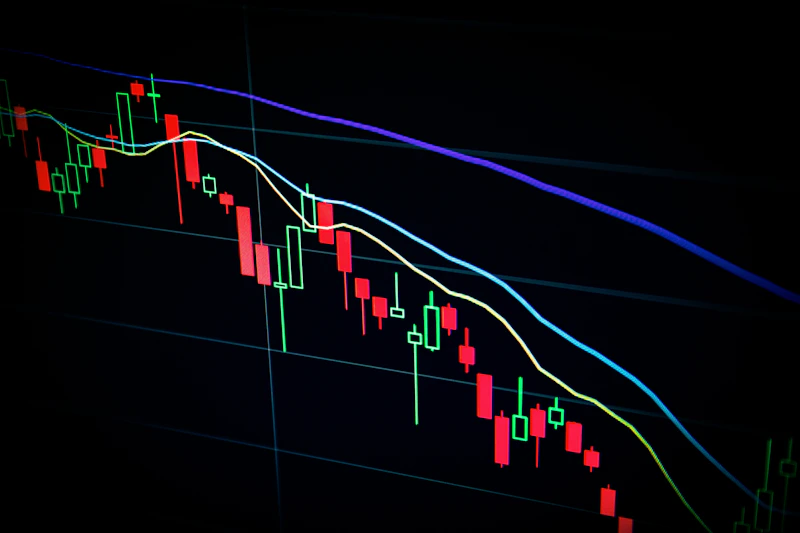
How does a seemingly isolated shock—a bank failure in one country or a sudden drop in oil prices—ripple through the global financial system, turning into a full‑blown crisis? The answer lies in a complex web of transmission mechanisms. This chapter dissects the three primary channels: investor sentiment and market psychology, liquidity shocks and credit crunches, and cross‑border contagion. Understanding these pathways is essential for anticipating how a crisis will unfold.
3.1 Investor Sentiment and Market Psychology
Financial markets are not purely rational; they are driven by human emotion. During crises, fear and panic can overwhelm fundamentals, causing asset prices to deviate wildly from intrinsic value. Behavioral finance identifies several psychological phenomena that amplify market swings:
- Herding behavior: Investors mimic the actions of others, especially in times of uncertainty. This leads to crowded trades, feeding both bubbles and crashes.
- Loss aversion: The pain of a loss is psychologically twice as powerful as the pleasure of a gain. As prices fall, investors sell to avoid further losses, accelerating the decline.
- Recency bias: Investors overweight recent events. After a crisis, they assume the worst will continue; after a boom, they extrapolate prosperity.
- Feedback loops: Falling prices trigger margin calls and forced selling, which push prices down further, creating a self‑reinforcing spiral.
The VIX index, often called the "fear gauge," spikes during crises, reflecting heightened uncertainty. The 2008 GFC saw the VIX soar to a record 80, while during the COVID‑19 crash it reached 85. This surge in fear translates directly into selling pressure and liquidity hoarding.
3.2 Liquidity Shocks and Credit Crunches
Liquidity—the ability to buy or sell assets without causing a drastic price change—is the lifeblood of financial markets. A liquidity shock occurs when this dries up. Banks stop lending, interbank markets freeze, and even normally liquid assets become hard to sell. This transforms a solvency problem into a systemic crisis.
How liquidity shocks spread:
- Bank runs: Fear that a bank will fail leads depositors to withdraw funds en masse, forcing even healthy banks to sell assets at fire‑sale prices.
- Margin calls and forced liquidation: As asset prices drop, leveraged investors receive margin calls. They sell assets to raise cash, pushing prices down further, triggering more margin calls—a vicious cycle.
- Credit crunch: Banks, facing capital shortages, curtail lending to businesses and consumers. This depresses economic activity, leading to defaults, which further weaken bank balance sheets.
The 2008 GFC is a textbook example. After Lehman Brothers collapsed, the interbank lending market seized. The TED spread (difference between Libor and Treasury bills) skyrocketed, indicating extreme credit stress. Central banks eventually stepped in with unprecedented liquidity facilities to restore confidence.
3.3 Contagion Effects Across Borders
Financial contagion refers to the spread of a crisis from one country or market to others, often beyond what fundamentals would justify. Contagion operates through several channels:
- Trade links: If a major trading partner experiences a recession, demand for exports falls, dragging down the economies of its partners. The 1997 Asian crisis spread quickly through regional supply chains.
- Financial linkages: Banks and investors often hold cross‑border assets. A default in one country can impair the balance sheets of institutions elsewhere. European banks were heavily exposed to U.S. subprime mortgages, transmitting the GFC across the Atlantic.
- Investor rebalancing: When a crisis hits one market, investors may sell assets in other markets to meet redemption requests or reduce risk, creating a cascade of unrelated sell‑offs.
- Wake‑up call contagion: A crisis in one country reveals vulnerabilities (e.g., weak banking systems, high debt) that investors then suspect exist in similar countries. This prompted the European sovereign debt crisis after Greece's troubles exposed Portugal, Ireland, and Spain.
The 1997 Asian Financial Crisis demonstrates contagion vividly. The Thai baht devaluation quickly spread to Malaysia, Indonesia, South Korea, and even Russia, despite varying economic fundamentals. Today, with globalized financial markets and interconnected balance sheets, contagion can occur within hours, as seen during the 2020 COVID‑19 market turmoil.
Comments
Post a Comment